Warning: This article contains images some readers may find distressing
Domestic abuse victims in Scotland are still not getting the communication they are entitled to from prosecutors, a watchdog has found, two and a half years after it first raised the alarm.
His Majesty’s Inspectorate of Prosecution in Scotland has called on the Crown Office and Procurator Fiscal Service to improve “as a matter of urgency”. It found the quality of communication with victims after key court appearances was unsatisfactory in 75% of the cases it reviewed and branded communication “Frankenstein” in style.
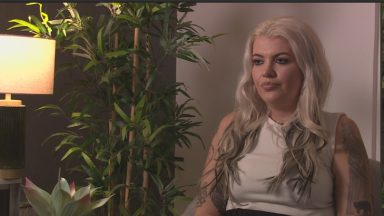
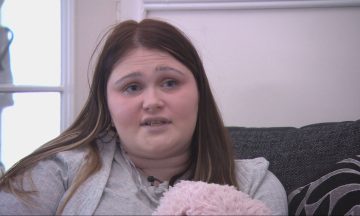
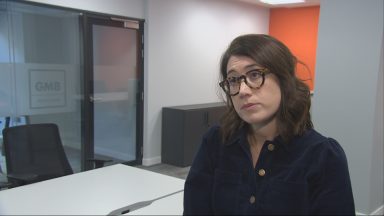
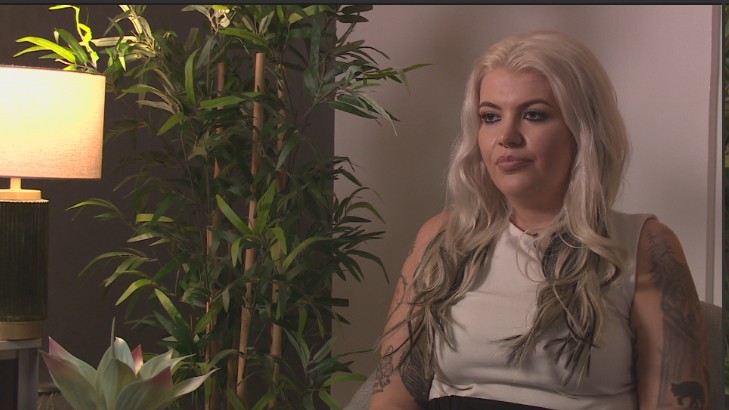
The findings are familiar for 28-year-old Cait. She gave evidence against her abusive ex-partner Brandon Thomson twice, six years apart.
“I feel like I had to chase them up a lot of the time rather than them reaching out to me,” she told STV News.
‘My own personal hell’
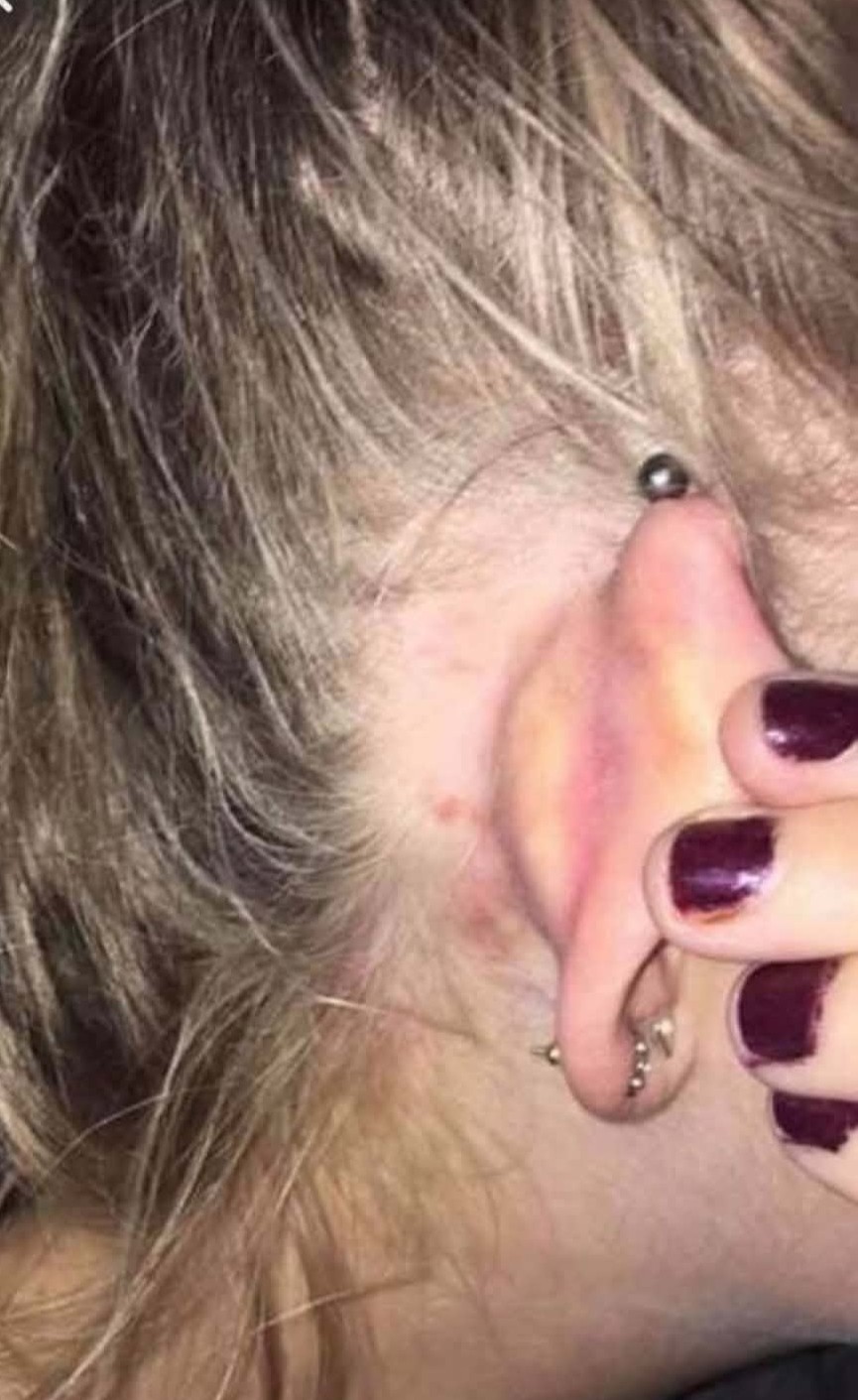
Cait was 18 when she met Thomson through a mutual friend group. The friendship turned romantic, and after a few months living at his dad’s house they moved into a flat together.
“At the beginning of the relationship, he wasn’t abusive. As time went on there began to be signs that he wasn’t making out who he was.”
The abuse began about three months in.
“It began with verbal abuse. For example, controlling what I do, what I wear, what I say, that kind of thing. I was only 18 at this time and so I was quite a vulnerable young girl, I would say.
“Living in that flat was like my own personal hell. Whenever he left the house, he would lock the door, and he would just constantly be checking on me. He just isolated me as much as he could. Every day, I’d wake up with a horrible sinking feeling in my stomach wondering what was gonna happen that day.”
She says he used her phone to go through her messages, including those with her family, and sent “hundreds of threatened text messages”.
“I could never have any nice things, and I couldn’t even dress the way I wanted.”
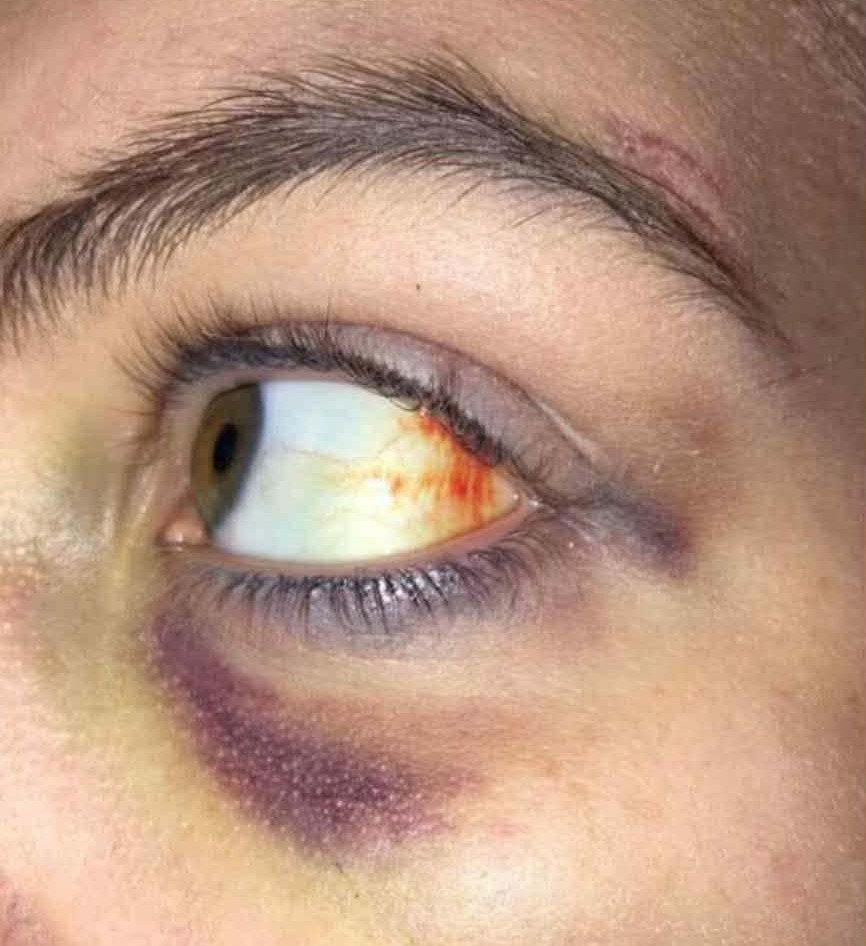
On one occasion, Thomson had kicked Cait to the ground and stamped on her arm when she raised it to block his blows, breaking her wrist in two places: “I got a new job in a care home, and it was actually meant to be my first day and he just didn’t want me to leave the house.
“My mental health deteriorated massively, and I turned into such a pale skinny girl. I didn’t recognise myself anymore. The things he used to say to me like the evil cruel things were imprinted on like my brain and I just started to believe it all and I thought that if I left him I would die.”
 STV News
‘My mum actually saved my life’
It was Cait’s mum who noticed something was wrong and began keeping a record.
“She kept a log of all the little signs and things like injuries I couldn’t explain. My mum actually saved my life to be honest… I think my mum was worried that if she pushed at the wrong time I would not speak to her, like I’d cut her off, because ideally that’s what Brandon wanted.”
The relationship ended after a final incident, when she phoned her mum and asked her to come and get her.
‘There was no support’
Cait reported Thomson to police in 2019, and at Falkirk Sheriff court he admitted of charges of harassment and stalking. She says the evidence she handed to police included “hospital records and videos screenshots and messages, pictures of injuries” but at that time, prosecutors did not pursue charges of rape or domestic abuse.
“There was no support. I wasn’t told about the victim impact statement. I just felt like it wasn’t taken seriously. I never heard anything after. I didn’t know if there was like a non-harassment order in place or anything.”
That is the kind of gap the inspectors are warning about. Their report said inconsistent communication could pose “significant risks” to victim safety, with victims not told in the later stages of a case if an accused has been released from custody or when bail conditions have been removed.
In one case they examined, a Victim Information Advice letter told a victim the accused had been remanded in custody when he had in fact been granted bail. In another, a letter giving the outcome of a trial was not sent until 69 days after the case had concluded. The report said many victims experienced “communication deserts”, with little or no contact from COPFS or its VIA service.
Cait moved out of the area for her own safety.
“I really lost faith in the justice system, I really did. I was an absolute shell of myself. I didn’t work, I didn’t go to college I was just constantly paranoid.”
‘The only thing different was there was two more victims’

In 2024, police came to Cait’s door to tell her there were more victims.
“I felt so sick and I was actually sick after they left. I was absolutely heartbroken that he’d claimed more victims.”
In October, Thomson was sentenced to 11 years in prison with a further two years monitored in the community for domestic abuse charges relating to three women, including Cait and three charges of rape. He was also handed non-harassment orders for all three victims.
The judge, Judge Arrol KC, described the women’s experience as a “real life horror story”.
The evidence presented at the High Court in Glasgow was the same evidence Cait had handed over in 2020: “The only thing different was there was two more victims they could have been saved. It shouldn’t be pushed on the victims like that the police are meant to be there to help.”
She believes her age counted against her the first time.
“I believe I was dismissed. I do believe that more could have been done at the time it could have saved other victims.”
This time she chose to give evidence without a screen: “I wanted to face him and just show that he did not win.”
The experience, she says, was different in other ways too.
“I felt like he didn’t have the compassion as much as the judge this time who was a woman. I would just like to say she was absolutely amazing. I feel like she really connected with the story and she felt it and she had very powerful words at the end of it. Even victim support was brilliant. Being able to do my victim impact statement as well because I feel like that was a major thing I wanted to do the first time round, but I wasn’t told about it.”
On watching her own footage played in court: “I just wish I could go back and hug myself and tell myself it’s gonna be okay.”
What the watchdog found
In Scottish criminal law, summary procedure is used for less serious offences heard by a judge without a jury.
The Inspector of Prosecutions Scotland review looked at 60 summary domestic abuse cases across four offices.
Communication was rated unsatisfactory in 75% of them, only a small improvement on the 80% recorded in its 2024 inspection. Inspectors noted some progress, including better communication after an accused’s first appearance in court.
Under a process called Enhanced Victim Engagement (EVE), all domestic abuse victims are supposed to receive a call from a prosecutor. Inspectors found no record of any attempt to make a call in 33% of cases where one should have been made. Where calls did happen, they were assessed as “overwhelmingly positive”. Victims in cases charged under the Domestic Abuse (Scotland) Act 2018 should also be offered a meeting with a prosecutor before trial, but inspectors found no evidence one had been offered in 80% of relevant cases.
 STV News
The report said prosecutors supported EVE but that capacity was a barrier, with prosecutors often having to choose between making calls and preparing to address the court.
Inspectors described many VIA letters as “‘Frankenstein’ in style – a patchwork of mismatched paragraphs pieced together”, and said they were often “confusing, nonsensical and inaccurate”.
The letters were often incoherent, included template headings that were irrelevant to the circumstances of the case or other errors. The Inspector found as a result, the correspondence was frequently confusing, nonsensical and inaccurate. In many instances, it fell well below the professional standard that victims are entitled to expect and victims whose first language was not English were not always contacted in a language they understood.
The report called it “astonishing” that there was no national document setting out a standard process for communication at each stage of a case, resulting in a “level of service that was worse than a postcode lottery for victims of domestic abuse”.
Chief Inspector Deborah O’Brien Demick said: “Throughout our inspection, we encountered too many instances where COPFS advised victims that they would receive a telephone call, information, or an update on their case, only for these commitments not to be fulfilled.”
She added: “Without meaningful change, victims of summary domestic abuse are being denied the timely, effective, and victim-centred communication they deserve and are entitled to receive.”
The report made no new recommendations. It urged COPFS to implement the 27 made in 2024, all of which were accepted. In 2025-26, 34,586 domestic abuse charges were reported to COPFS, up 14% on the year before.
A spokesperson for the Crown Office and Procurator Fiscal Service said: “The report has identified cases where victims have not received the standard of communication they should. The Crown Office and Procurator Fiscal Service takes that seriously.
“A lot of work has been done across the prosecution service since the 2024 inspection and this report recognises improvements in some areas. It is clear that improvements are not being seen consistently for all victims of domestic abuse across Scotland.
“COPFS will look carefully at what the Inspectorate has found and consider what more can be done to change the way we communicate.”
 STV News
‘You can claim back your life’
Cait says there is still more to do.
“I think it’d be hugely beneficial for them to speak to people who’ve actually went through it. I think there still needs to be more support in place for like victims after abuse because it doesn’t just go away. I feel like in schools and things teaching people about what abuse is what are the signs.”
And she has advice for anyone worried about someone close to them.
“If you do think someone’s been abused keep a note of everything. It could be your friend your family member your neighbour even a stranger in the street.”
She has not lost all faith in the system.
“I do believe it has changed a lot. I do think women are being heard more.”
Her life now, she says, is one she once only dreamed of.
“I’ve got an amazing house that I love. I’ve got nice things. I can wear what I want. I can get tattoos, for example. I love myself now and I love my life.
“I don’t want my story to seem a sad one. You can get better. You can heal. No one in this world has the right to abuse you or ever make you feel small or ever hurt you in any way and you can claim back your life.
“I mourn the girl I was before him, I cry for the girl I was during him but I adore the woman I have become. I’ve moved on and met the love of my life and I want anyone currently going through this to know time really is a healer.”
Follow STV News on WhatsApp
Scan the QR code on your mobile device for all the latest news from around the country