 Police Scotland
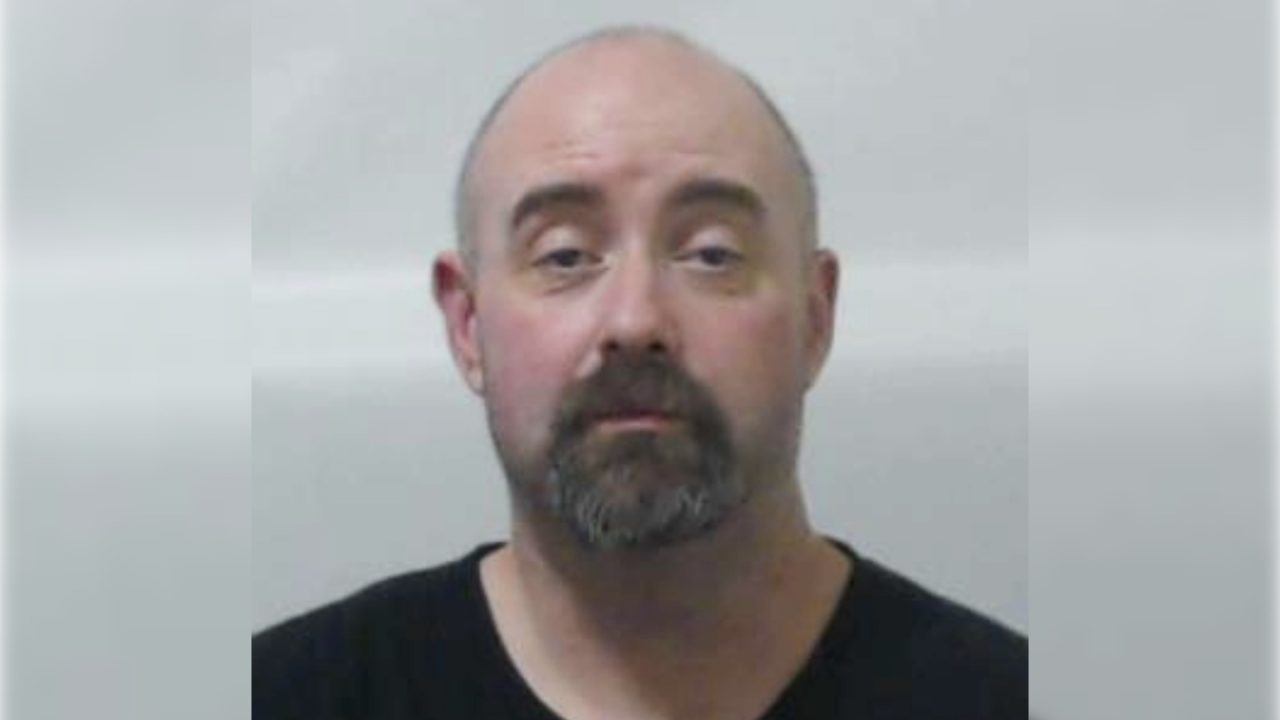
A fraudster behind a £1m fake identity racket while on the run for more than a decade has been jailed for four years.
Craig Milligan went missing in 2010 while facing an indecent images accusation and awaiting sentencing for a fraud charge.
The 47-year-old went on to evade the authorities by living under the names of two dead men.
But, he was finally snared in late 2024 following a routine driver check by police in Dumfries, where he had set up home.
Officers went on to search his house in the town – and uncovered a sophisticated set-up to make false IDs, including scanners, printers, ultraviolet lights and holograms.
It sparked an investigation, which led to police finding Milligan had illegally opened seven bank accounts and six credit cards using the aliases.
Cash that flooded in over the years included nearly £300,000 in cryptocurrency payments – as well as £6,000 from eBay.
On Thursday, Milligan was jailed after pleading guilty at the High Court in Glasgow to a charge of being involved in a fraudulent scheme as well as three other offences under the Identity Documents Act.
Judge Lady Drummond told him: “You recognise yourself that your fraud has caused harm.
“It is likely to have impacted on the people whose identities have been stolen and their families who to learn of this.
“Once these documents were sold, you had no clue how they might have been used.
“The sentence I impose is for the protection of the public, to punish you for the crimes, to mark society’s disapproval, deterrence and your rehabilitation.
“For offences of this gravity, only a prison sentence is appropriate.”
Routine police stop led to capture
The court was earlier told how Milligan – a Canadian and British national – arrived in the UK after the death of his then fiancée.
He had been due to be sentenced for bogus job fraud at Edinburgh Sheriff Court in August 2010.
During the probe into that crime, a number of his electronic devices were analysed.
This resulted in allegations in connection with indecent images.
He did not then turn up in court to face these accusations or learn his fate for the fraud charge.
“…identity given appeared to be the same as an American national who died in Florida in 2009”
Prosecutor Kirsten Cockburn explained: “Since the failure to appear, Craig Milligan had been living under false identities.”
Ms Cockburn said the net began to close on Milligan when his Audi RS3 was stopped in Dumfries in June 2024 for a routine driver and documentation check.
He told officers his name was Daniel Pindell before eventually being allowed to go on his way.
But, Milligan was pulled in again in October of that year.
Ms Cockburn: “Police began a proactive inquiry and suspicions were raised that the details provided by him were false.
“It was discovered that the identity given appeared to be the same as an American national who died in Florida in 2009.”
Further checks revealed that as well as being known as Daniel Pindell, Milligan had also been using the name Thomas Warren.
This person – originally from the Republic of Ireland – had died in Texas in 2010.
Ms Cockburn said it emerged bank accounts with “large sums of money” had illegally been opened under the identities of the dead men.
Bogus documents had been used for the applications, with Milligan’s photo on them.
Milligan’s home, which he shared with his partner, was then raided in January 2025.
Police initially found £10,000 in cash and bank cards in the name of Thomas Warren hidden in a bedroom.
In what was described as an office at the property, there were then letters marked for Daniel Pindell.
It was soon after officers found a hoard of “items used for the making of false identity documents”.
The prosecution said these also included a heat gun, blank ID cards, a magnetic strip encoder, ink, a laminator and a press machine.
There were even more fake documents in the names of eight other individuals.
It was only after Milligan was taken to a police station that he disclosed his true identity. This was helped confirmed by fingerprint checks.
A financial probe revealed there were total “credits” in all the bank accounts of £1.03m.
This consisted of £646,000 of payments from other “individuals”, £262,000 in crypto transactions, nearly £5,000 via PayPal, £5,900 from eBay, £41,000 in cash and cheque deposits, £11,750 from his partner, £55,750 from another bogus account and £4,000 via other “sources”.
The credit cards were said to have been used for “living expenses”.
Payments totalling more than £300,000 were made to five of them over the years.
Prosecutors stated all the “banking facilities” had been “obtained by fraud”.
Kevin Henry, defending, told the court that his client’s current partner was unaware of his real name and background until his arrest.
The advocate earlier stated that for the 2010 matter, his client had poor mental health at the thought of going to prison in a strange country.
Mr Henry added: “He said that this was reckless and has led to a period of prison that would be in excess of anything that would have been imposed in 2010.
“He has asked me to convey his regret and sorrow for his actions.”
Follow STV News on WhatsApp
Scan the QR code on your mobile device for all the latest news from around the country