 Spindrift
Four men jailed over an “outrageous” £6m NHS contract corruption case have succeeded in having their prison terms reduced.
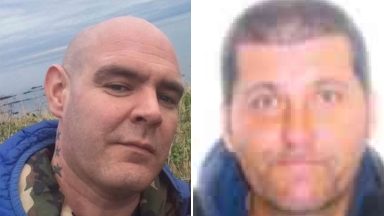
Gavin Brown and Adam Sharoudi used their connections with senior health service employees Gavin Cox and Alan Hush to obtain lucrative telecoms contracts between 2010 and 2017.
A jury sitting at the High Court in Glasgow heard how a probe into Brown and Sharoudi’s firm Oricom Ltd found Hush and Cox gave the company “commercially sensitive information” in return for £88,000 worth of cash, gifts and holidays.
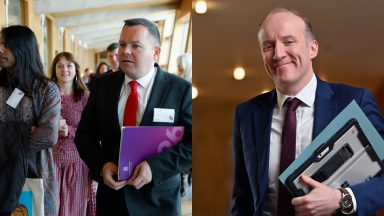
Judge Lord Arthurson jailed business directors Brown, 49, and Sharoudi, 42, for seven and eight years respectively, while Hush, 68, and Cox, 60, were jailed for eight and six years.
Passing sentence, Lord Arthurson said evidence given by each of the men was “self-serving, arrogant and mendacious”, adding they had “subverted public trust in NHS management”.
Lawyers for Sharoudi and Hush argued the sentences imposed on them were excessive and that the relevant terms should have been made concurrent rather than consecutive.
They argued that the crimes formed one course of criminal conduct and that Lord Arthurson should not have treated the offences as separate, unrelated crimes.
Lawyers for Brown argued that his sentence was excessive because, although he had not been convicted of fraud, he had received the same overall term as Sharoudi and Hush.
They said Brown should receive a lesser sentence than the two men who had been convicted of fraud.
When imposing a sentence on Cox, Lord Arthurson’s decision was based on his conduct being less serious than that of his co-accused.
His lawyers told the appeal court that, if the sentences imposed on the other three men were reduced, his sentence should also be reduced to preserve that distinction.
In a written judgment issued on Wednesday, judge Lord Ericht and his colleague Lady Carmichael agreed with submissions made by the defence lawyers.
They reduced Sharoudi and Hush’s sentences from eight years to seven years.
Brown had his sentence cut to six years, while Cox had his term cut to five years.
In the judgment, Lord Ericht made reference to the submissions made to the court by lawyers acting for Sharoudi and Hush.
He wrote: “The two appellants whose sentences were consecutive, Mr Sharoudi and Mr Hush, both appealed on the ground that the sentences should have been concurrent.
“Their counsel submitted in respect of their respective client that the sentences were all part of the same course of events and should have been concurrent.
“In our view, there is force in these submissions.
“Accordingly, the judge erred in imposing a consecutive sentence.”
Writing about Mr Brown, Lord Ericht said it would be unfair for his sentence to remain the same as the sentences imposed on Sharoudi and Hush, because Brown had not been convicted of fraud.
He wrote: “In all the circumstances, including his personal circumstances and the prospects of rehabilitation, we shall reduce Mr Brown’s cumulo sentence on the corruption charges from seven years to six years.
“The sentence on the Proceeds of Crime charge will remain unchanged at five years.
“The resulting total period of imprisonment is six years.”
Lord Ericht also concluded that the sentence given to Cox was excessive.
He added: “Having reduced the sentences of the other appellants, in the interests of comparative justice we shall reduce Mr Cox’s sentence on the corruption charge from six years to five years.”
Jurors at the trial in Glasgow heard how the group’s crimes were only uncovered after the theft of two NHS-issued mobile phones, which led to thousands of text messages and emails being discovered on multiple laptops, computers and mobiles.
The 16-week trial heard how Oricom did “acquire, use and possess” a total of £5,719,244 of “criminal property” paid for by NHS Lothian, NHS Grampian, NHS Lanarkshire, NHS Greater Glasgow and Clyde and NHS Ayrshire and Arran.
One single contract was worth £3.1m, the trial was told.
Oricom’s offices were raided by investigators from NHS Scotland Counter Fraud Services in 2015 following concerns about how the deals were secured.
Brown founded Oricom in a shed in Irvine, Ayrshire, in 2008, and Sharoudi later joined as a director.
Sharoudi became friends with senior health service employee Hush.
A text exchange between Sharoudi and Hush, who was described during the trial as “the big cheese” in the NHS telecoms department, showed how the NHS manager wanted to “earn some commission”.
Hush claimed that had been a joke and that any money he received had come from his late father.
But the court found he “ferreted about” in a “deception” to obtain false “dodgy” quotes to help the firm get lucrative business.
In return, he was handed Eurostar train tickets, stays at the Troy and Re Hotels in London, a laptop, an iPad, meals and concert tickets to see Paul Simon, Rufus Wainwright and Patti Smith for his part in helping Oricom secure the contracts.
Cox, of Cathcart, Glasgow, was head of IT and infrastructure at NHS Lanarkshire.
He denied giving Oricom the “heads up” with information to give them a “commercial advantage” to secure business.
It was suggested it was “not a level playing field” for other bidders.
Brown had been a guest at Cox’s surprise 50th birthday party.
His “rewards” were said to include hospitality at the Scottish Grand National at Ayr, a night at the Loch Green Hotel in Troon and a meal at Elliots in Prestwick.
Jurors heard he also got thousands of pounds worth of Barrhead Travel holiday vouchers which allowed him to go on trips to New York and Lanzarote.
Cox said he believed they were gifts to his wife – a newspaper advertising manager – from Brown’s partner, with whom she had become friends.
He also denied ever getting a series of cash handouts from Oricom.
In total, Hush was given £18,231 of cash bungs and gifts, while Cox was handed more than £70,000.
Among the charges was one that Oricom, in effect, bribed Cox to secure work, including a near £700,000 deal.
The company is still trading.
Gordon Young, head of NHS Scotland Counter Fraud Services, described their actions as “outrageous”.
In the written judgment, Lord Ericht said he and Lady Carmichael rejected arguments made to them that the sentences should be significantly lower because there was no clear evidence that the NHS had been overcharged or that the work carried out for the health service was unnecessary.
He wrote: “As the sentencing judge made clear in his sentencing remarks, the essence of the crimes for which Mr Sharoudi was being sentenced was the corrupt process.
“In our view, that process remains corrupt whether or not the contracts awarded were at a lower price or at a higher standard.”
He added that Sharoudi had played “a leading role in a long-running course of corruption” which undermined the proper function of NHS procurement.
Follow STV News on WhatsApp
Scan the QR code on your mobile device for all the latest news from around the country