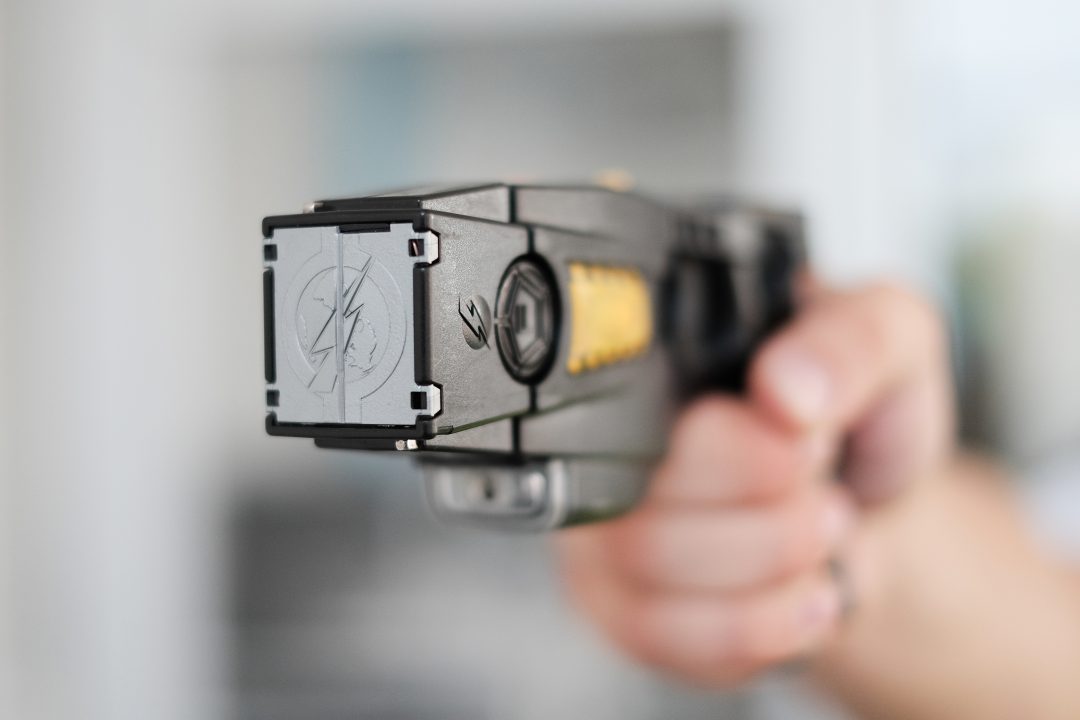
The children’s commissioner has called on Police Scotland to stop the use of Tasers on children in custody amid missing data in an investigation into the use of force on children and young people.
A new report from the Children and Young People’s Commissioner investigated how often police had used force against children like Tasers, incapacitating spray, spit hoods, bite guards, strip searches, and “empty hand” techniques which include punches and kicks.
The report found that vital aspects of the data were missing, leaving areas of Police Scotland’s policies and practices unable to be scrutinised.
Gaps included no recording of whether a child has a disability, unless related to Taser use, and most records also lack specific details of a child’s age.
The Commissioner is calling for an immediate end to police using Tasers or PAVA (incapacitating spray) on children in custody settings, and further work by Police Scotland to restrict the use of both.
Commissioner Nicola Killean reviewed Police Scotland data from 2023-24, prompted by concerning published information by the Scottish Police Authority (SPA) about the number of incidents involving children.
Ms Killean said: “When children come into contact with the police, for whatever reason, they should be treated first and foremost as children.
“The police play an important role in maintaining public order and keeping people safe. Although there are some occasions when police will have to use force against a child, to keep the child or others safe, this must always be done using a rights-based approach.
“Every statistic is a real child who may have had a traumatic experience of being struck, or strip searched, or even Tasered.
“We must record details of the incident, and of the child – for example, their age, their ethnicity, their sex, and if they are disabled. Without recording and monitoring more thoroughly, Police Scotland can’t identify and address if some groups of children are being impacted more than others.
”The report also found that a Taser was used 43 times against children, 16 of which against children with mental health cited as a factor, 12 against care experienced children, and 10 against children with a learning disability or autism.
There were 262 incidents of a child being strip searched in police custody and spit hoods and bite guards were used on children 148 times, with 32 occasions taking place in custody settings.
“Empty hand” techniques and strikes were used 1,313 times, including 641 times for restraint, 97 times as a strike, and 539 times to “takedown” a child.
Evidence that highlighted the serious harm that some use of force can cause, including the risk of suffocation and death.
The Commissioner has made 21 recommendations in her report which include requesting Police Scotland record data on disability, age, ethnicity, and sex, for all uses of force against children, in one accessible place.
Other recommendations include requesting that Police Scotland immediately stop the use of Taser and PAVA spray in custody settings, and establishing an independent working group to support Police Scotland in reviewing guidance and training against relevant human rights standards, in particular the United Nations Convention on the Rights of the Child (UNCRC).
The Commissioner also said Police Scotland should also work with the Scottish Government to make sure they have necessary resources to improve recording and reporting on data.
Nick Hobbs, head of legal at the Children and Young People’s Commissioner Scotland, said: “Human rights standards require proper recording and monitoring to ensure the protection of children’s rights.
“This includes being able to identify and take account of groups who may be particularly vulnerable so the impact of policies, guidance, training and practice can be properly scrutinised and reviewed where necessary.
“Our investigation helps all those responsible for children in conflict with the law to respect their rights. We look forward to the implementation of our recommendations to ensure that the rights of all children in contact and conflict with the law are respected, protected and fulfilled.”
A Scottish Government spokesperson said: “Where children come into conflict with the law, it is vital that their rights are respected and appropriate protections are in place.
“Police officers do challenging work in often very difficult circumstances and they are bound by a code of ethics that sets out the importance of respecting human rights, including those of children.
“While decisions on proportionate policing and recording practices are operational matters for the chief constable, we will carefully consider the report.”
Assistant Chief Constable Catriona Paton said: “Human rights are at the heart everything we do, and we will carefully review and consider the recommendations.
“Our officers are required to respond to emergencies and crises and keeping people safe is an absolute priority.
“When the use of force is required, it is used proportionately, legally and only when necessary.
“Its use will be based on an assessment of the risk presented and other factors, including whether children are involved. The priority will be to ensure the safety of the individual as well as that of the wider public.
“Police Scotland is committed to playing its part in ensuring that every child in Scotland grows up safe and respected.
“The incorporation of the United Nations Convention on the Rights of the Child into law is an important step for Scotland in making a greater formal commitment to listen to children, respect their voices and keep them safe.
“We will continue to work with in partnership to protect and promote the rights of Scotland’s children.
“The use of force by Police Scotland is transparent, subject to scrutiny and accountability and data is published every quarter.”
Follow STV News on WhatsApp
Scan the QR code on your mobile device for all the latest news from around the country