
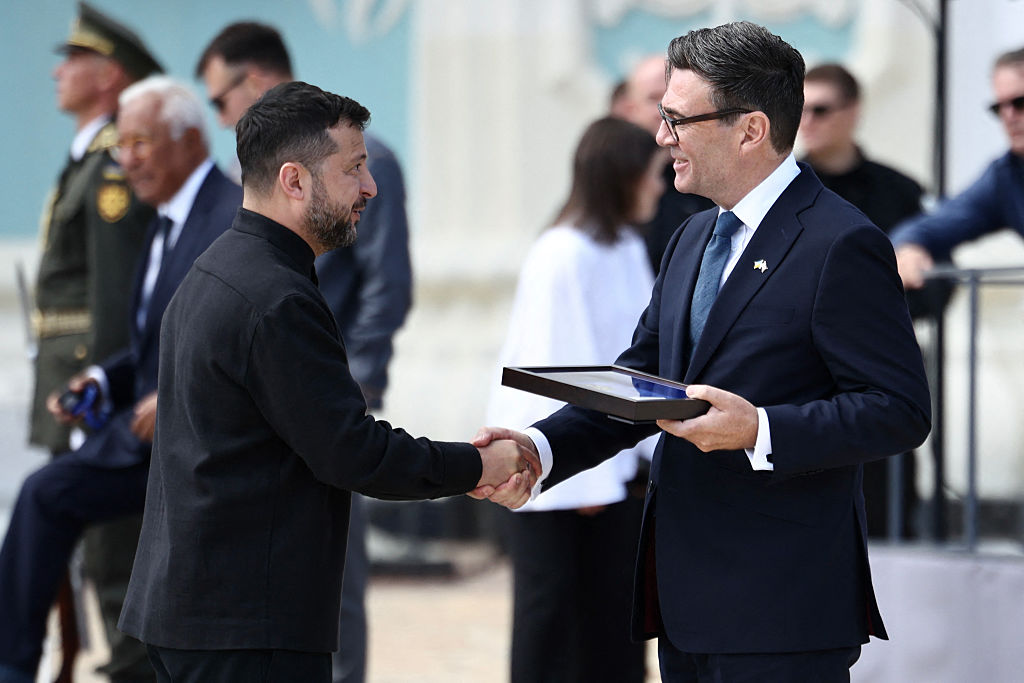
Prime Minister Andy Burnham is in Kyiv today, marking the 35th anniversary of Ukraine’s independence from the Soviet Union, before chairing his first Coalition of the Willing meeting.
His visit is significant, and not just because of the special anniversary it has coincided with. This is Burnham’s first foreign trip as Prime Minister, after President Volodymyr Zelensky became the first foreign leader that he hosted in the UK, but it comes at a time of personal tumult for the Ukrainian leader.
In Kyiv, Burnham reiterated the UK’s backing for Ukraine and handed over an instruction manual of sorts, which will allow Kyiv to build long-range Scalp missiles – the French equivalent of Britain’s Storm Shadow technology.
Burnham has approved defence company MBDA to share classified blueprints that will allow missile-building in Ukraine, after a major defence deal last week between France and Ukraine agreed to establish production assembly lines in the country.
Britain’s contribution will be to allow the exportation of UK-made components used in the missile, as the deal between the French and the Ukrainians is already under way. The UK will also continue to produce long-range strike technology for Ukraine as part of ‘Operation Brakestop’.
“On Ukraine’s 35th anniversary of independence, the Ukrainian people should be in no doubt: the UK is behind you today and for as long as it takes,” Burnham said in Kyiv.
He has already received an award on behalf of the British people for the UK’s support for Ukraine. The Prime Minister wants to make clear his commitment to the war-stricken country will remain as strong as it has been under previous prime ministers – primarily Boris Johnson and Sir Keir Starmer – who made British backing for Ukraine a key part of their legacies.
Burnham’s reassurance will come at a new low point for diplomatic relations between Britain and Russia, however: last week, Moscow’s embassy in London issued a warning after it emerged that UK drones had been involved in deep strikes into Russia.
Britain could face “consequences”, it said, adding that the more the UK becomes involved in the war, “the higher the price it will pay”. Today, a Kremlin spokesperson said that the UK is adding “fuel to the fire”.
The war is starting to more viscerally affect the lives of Russian civilians, with mounting strikes on vital infrastructure causing fuel shortages and impacting delivery services. In a further blow to UK-Russian relations, and as revealed by the Sunday Times, Moscow removed its ambassador to the UK, Andrei Kelin, last month with no active plans to replace him. It’s a move that Russia hopes would make Britain’s latest Prime Minister think twice about rowing in behind Ukraine.
That hasn’t appeared to deter Burnham, though, as the Scalp missiles he’s highlighting today are long-range enough to strike far into Russian territory. Meanwhile, his defence minister Luke Pollard told the BBC that he wants to see greater defence spending and more investment in UK businesses in Britain’s push to help Ukraine defeat Russia – ducking a question about sacrifices those living in the UK may have to make if defence spending is to rise, but promising that this would create opportunities for jobs and economic growth. Yet while this is all good news for Zelensky on paper, the Ukrainian President is facing growing pressure at home.
Last week brought an uncomfortable intervention by Zelensky’s former defence minister, Mykhailo Fedorov – a politician popular with the people over his modernising approach to the military who was fired last month after a spat with the head of Ukraine’s armed forces. Fedorov has called for wartime elections, insisting that Ukraine shouldn’t let Vladimir Putin get in the way of democracy. Zelensky has, unsurprisingly, remarked over the weekend that elections at this stage would “pose enormous risks” and “split Ukraine apart”.
Zelensky may have shut down these suggestions for now, but it’s another sign of the growing domestic tensions he’s facing – while reports coming from inside Ukraine detail a spreading fatigue with the conflict, amidst uncomfortable tales of recruitment officers ambushing men on the streets in a conscription drive. But the Ukrainian leader’s diplomatic efforts have seen him manage to retain the strong support of his European allies and even patch up an initially antagonistic relationship with US President Donald Trump.
Zelensky will be hoping that today’s renewed commitment of support from Britain’s new Prime Minister will encourage the Americans to follow suit – and persuade his people to keep the faith in him as President for now.
Follow STV News on WhatsApp
Scan the QR code on your mobile device for all the latest news from around the country