
 Getty Images
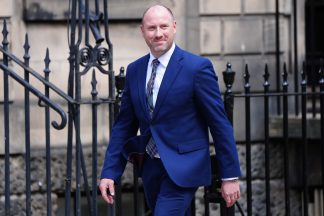
Alan Milburn is “unapologetic” about his proposals to redirect cash from the benefits pot to employment support for young people.
The former Labour health secretary has spent months digging into the NEETs crisis facing the UK – we have the highest rates of young people not in education, employment or training in Europe after Romania – and today his much-anticipated final report has been published. Its conclusion? That the welfare state is failing today’s young people, not saving them.
“This is not a crisis of aspiration; this is a crisis of opportunity,” he told a packed press conference at Google’s London HQ this morning.
“A lost generation is not a fact of life, it’s a choice – and I believe it’s the wrong one.” He claims that once people end up on welfare, they find it “very hard” to get out – saying that 50% of young people who end up on benefits will remain on them 15 years later, and be no better off in their career.
Pushing back against the “snowflake” rhetoric that is frequently pushed young people’s way as reports of anxiety have shot up in recent years, Milburn today called for a new approach which would make young people a “top priority”.
It’s a vision that focuses on the next generation. Amongst the 278 pages of his report, the Labour adviser sets out recommendations that span benefits reform, employment opportunities and business incentives. It’s a plan that, Milburn said today, will not only require new resources but new laws and institutions. It will also cost money: while he wants to see the benefits bill come down in the long term, Milburn says that he is more interested in improving lives.
So what does he propose? Creating a different welfare system for young people. While some existing benefits are devolved – Scotland has the adult disability payment rather than the personal independence payment – his suggested scrapping of universal credit for the under-25s in favour of a new youth allowance would affect Scottish young people.
This would mean some people would lose some of the money they receive now – but Milburn is adamant those who need help most could receive more. He told me today he hopes the Scottish Government will take forward the bulk of his recommendations, adding that he had spoken with the SNP about these plans.
Milburn has called for a statutory entitlement to a route into education or employment – a legal guarantee to help young people into jobs. And he also wants to “change the deal with business”.
The Labour adviser told today’s press conference that issues with employment don’t solely rely on the supply side – but the demand side too.
A “new bargain” with employers is required, he said, with the government needing to make it “easier, cheaper and less risky” for employers to hire young people. He is not in favour of lowering the minimum wage but has suggested the government take a look at how quickly it goes up.
Milburn has also taken aim at the government’s decision – under former chancellor Rachel Reeves – to raise employer national insurance contributions, the tax employers pay on their employees. He wants to see a pathway that over five years would see this employer tax come down, focusing first on the hospitality and retail industries.
To convince a Labour government to trim down the welfare state is never going to be easy. Former prime minister Sir Keir Starmer faced the biggest backbench rebellion of his premiership when he brought forward a welfare bill last year – which had already been watered down after immense backlash.
Today, Work and Pensions secretary Pat McFadden told the Commons that the government supports the recommendation for legal rights for young people to access employment opportunities, with a more personalised system. Milburn has been appointed the chair of a new Youth Opportunities Unit.
McFadden also said that the government’s jobs guarantee – the provision of a six-month job – will be made available after 12 months on universal credit, rather than 18 months. But on the recommended benefits reforms, MPs will have to wait until the new year.
The responses from other parties are more supportive too than in other policy areas. The Scottish Government’s education secretary Mairi McAllan today claimed: “Many of the reforms it recommends for England… reflect approaches Scotland has already embedded over many years.”
The Conservatives said that “where Milburn gets it right, we’ll back him”, but added: “His review is too cautious on reversing that damage, and too often his answer is the big and expensive hand of the state.”
Reform UK hit out at Labour’s ‘jobs tax’ – that hike to employers’ national insurance contributions – and said that if it got into power, it would “create an elite network of technical colleges” and “end university scam courses”. But while both the report and the associated ministerial statement on it have so far landed well, a number of Labour MPs remain worried about the extent of the proposed benefits cuts. One told me that if the report’s benefits reforms are implemented in full, the Labour Party may as well be the Conservatives.
But Milburn’s argument is that, while his recommendations are costly, the money is being spent anyway. He claims £22bn a year is spent on the one million young people not in work or education. This plan is about reprioritising that funding to set young people up better in life: a compassionate argument against the welfare state.
“This is the tip of a larger financial iceberg”, Milburn warned today, reminding us that he had only taken a look at the under-25s. He wants these principles to be applied to the rest of the workforce – and for that, he says, “the task is to change the system itself… The old welfare state needs to evolve into a new working state.”
Follow STV News on WhatsApp
Scan the QR code on your mobile device for all the latest news from around the country