 Getty Images
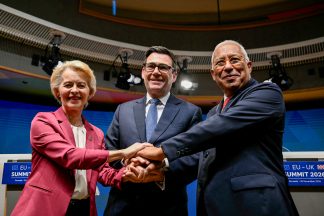
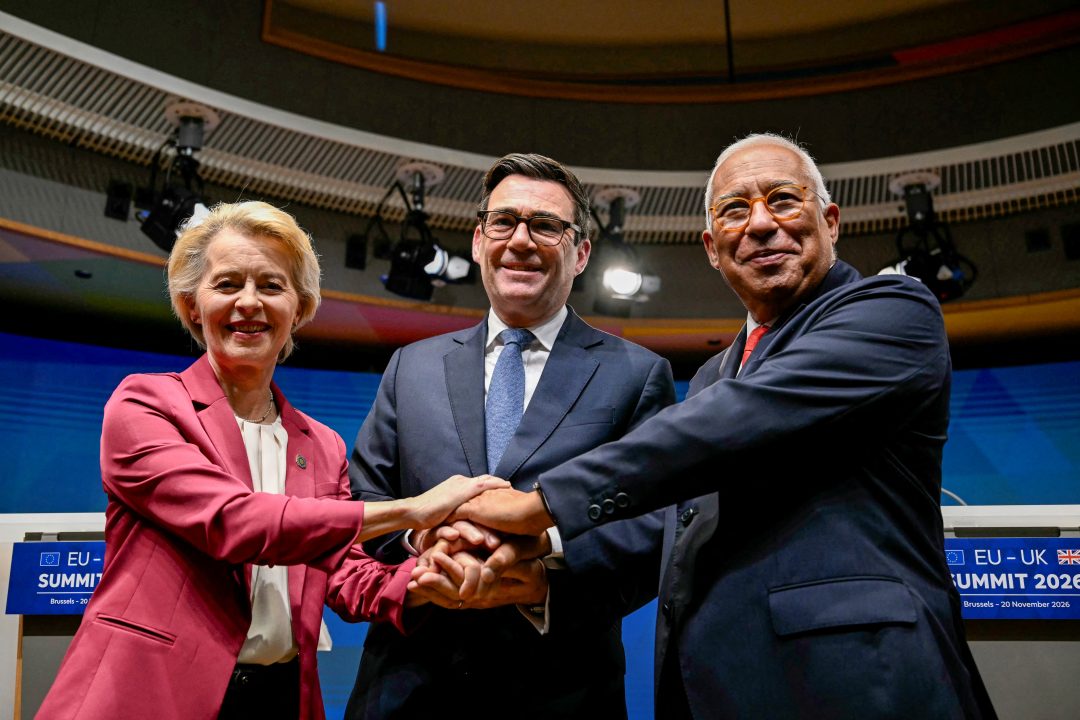
Prime Minister Andy Burnham has welcomed a new agreement with the European Union, describing it as a “landmark” deal that will benefit people across the UK.
The agreement includes measures aimed at reducing barriers to food and agricultural exports, linking emissions trading systems and introducing a youth experience scheme.
The latter measure could allow up to 100,000 young Europeans to live and work temporarily in the UK, with similar opportunities for young Britons in EU countries.
European Commission President Ursula von der Leyen said the package marked a “turning point” in relations between the UK and the EU after Brexit.
Burnham also confirmed the UK will take part in the EU’s action plan to tackle small boat crossings in the English Channel, describing it as a “very significant step forward”.
But tensions still remain, with a six-month deadline put on reaching an agreement over EU demands to cut tuition fees for students from member states studying at British universities.
So what is in the deal and how will Scottish firms be impacted? STV News takes a look at the key points to emerge from a significant day in Brussels.
New food export rules will ‘lower costs for consumers’
The food and agriculture deal, aimed at ending post-Brexit export checks, will see Britain align with the EU on trade rules on sanitary and phytosanitary (SPS) goods, such as food and plants, from March 2028.
Because Northern Ireland was aligned with EU SPS rules under the Windsor Framework, agri-products were able to move across the Irish border without routine controls.
But the post-Brexit arrangements in the Northern Ireland Protocol meant consignments of live animals, animal products, plant products, high-risk foods, and wood packaging material from Great Britain to Northern Ireland had been subject to documentary, identity and physical checks.
The new deal reached on Friday will allow freer movement of these products between Great Britain, Northern Ireland and the EU.
Kate Rowell, chair of Quality Meat Scotland, said the deal has the potential to deliver significant benefits for Scotland’s red meat sector.
She said: “The EU is a vital market for Scottish red meat. QMS’s latest annual export survey recorded a record £190m in export sales, with almost 99% of revenues coming from EU markets from August 2025 to July 2026.
“Reducing certification requirements, costs and delays could make a real difference to exporters, while creating new opportunities for smaller businesses to access European markets.
“However, the implications extend beyond businesses exporting to the EU. Closer regulatory alignment will also affect domestic producers and processors, making clear guidance, sufficient preparation time and ongoing industry engagement essential.
“Ultimately, the success of the agreement will depend on how it is implemented and whether it delivers meaningful benefits across Scotland’s red meat supply chain, while minimising additional costs and complexity for businesses.”
Salmon Scotland said further work would be needed to remove other trade barriers, including restrictions on transporting salmon in larger, reusable containers and rules affecting boxes used to ship fresh fish by air.
Tavish Scott, chief executive of Salmon Scotland, said: “Scotland’s salmon sector will benefit greatly from improved trading arrangements between the UK and the EU.
“After ratification, this will reduce costs, border checks and the time taken for European customers to enjoy nutritious Scottish salmon on their dinner plates, where it is in increasing demand.”
A spokesperson for the Scotch Whisky Association said: “The EU is the largest regional export market for Scotch Whisky, worth £1.5bn in 2025. For Scotch Whisky producers, the prospect of reducing trade friction with our closest trading partner is welcome, as is constructive dialogue between the UK and the EU.
“We will look closely at the detailed guidance being published following the summit, and at how the sector can work with the UK Government and our EU trading partners to continue to ensure a positive trading environment for Scotch Whisky, not just in this important market, but around the world.”
What is the emissions trading scheme?
The UK Government claims the food and agriculture deal will add up to £5.1bn a year to the economy, cutting red tape by removing the need for certificates and border checks for products crossing between the UK and EU.
Linking the emissions trading regime, which will protect British exporters from facing a carbon tax when supplying customers in the EU, could add a £3.8bn annual boost, officials claimed.
Retailers have broadly reacted positively, heralding the trade deal as something “we need” which will benefit “consumers and suppliers alike” in the UK.
But a spokesperson for INEOS, which owns the Grangemouth industrial complex, said: “The EU is itself reviewing its emissions trading system.
“It makes little sense for Britain to commit to alignment before knowing what the future rules will be, or what influence the UK will have over them. This will add to uncertainty for UK industry and further undermine investment confidence.
“Any agreement must protect the long-term competitiveness of British industry, maintain effective safeguards against carbon leakage and address the growing threat from cheap, high-carbon imports from China and the USA.”
What is happening with youth movement?
Referring to the agreement on youth mobility, Burnham said Brexit in 2016 “limited the horizons of our young people in quite a significant way in terms of their opportunities in life, but then Covid also impacted this generation and they found it hard”.
The new deal agreed on Friday will see the introduction of a youth experience scheme that could open the doors for 100,000 young Europeans to temporarily work in the UK, with Britons able to do the same on the continent.
Tensions over the deal remain, however, with a six-month deadline put on reaching an agreement over EU demands to cut tuition fees for students from member states studying at British universities.
Officials in Brussels had indicated that implementation of the deal announced on Friday could be affected if the tuition fees issue is not resolved.
But the UK insisted the deal is done and dates for when the agreements come into force would be set out in a joint statement with the EU and are not conditional on the fees issue.
Follow STV News on WhatsApp
Scan the QR code on your mobile device for all the latest news from around the country