
 Getty Images
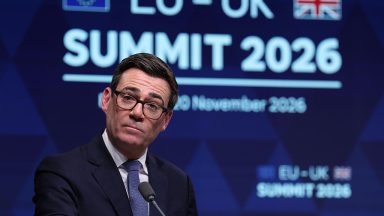
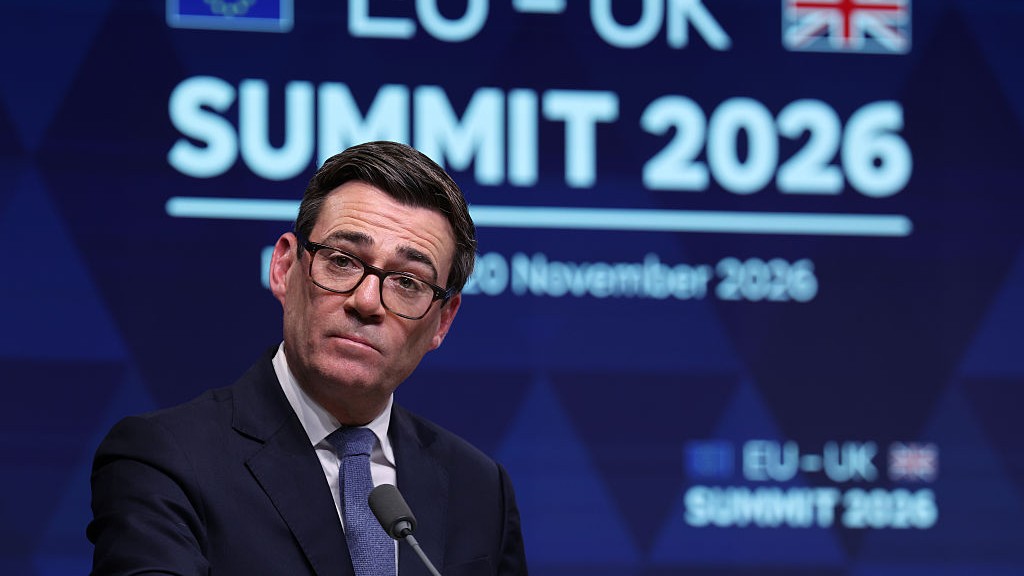
Andy Burnham’s talk about Brexit may endear him to the British masses who want to rejoin the European Union, but it’s creating a headache for his Scottish Labour MPs who don’t want a second independence referendum.
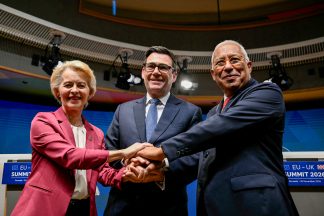
Although the Prime Minister has been clear that there will not be a second vote on Europe in this parliament, his remarks from Brussels last week – he said he wanted to ‘brainstorm’ all possible options for the UK’s relationship with the EU – have pushed Brexit back into the limelight.
Tuesday’s Westminster Hall debate, secured by the SNP’s Seamus Logan, was about the inconsistency in the government’s stance – if Labour does indeed decide to back a second referendum on the European Union. (It’s important to note that the Prime Minister has said he won’t go back on the Brexit red lines set out in Labour’s 2024 manifesto.) The SNP says that if the 2016 vote is rehashed, the 2014 should be too.
Seamus Logan set out three questions today: Firstly, if the government truly believes that Scotland wants to remain in the Union, why not put that to the test in a vote? (This ignores the cost of conducting a referendum: the 2014 poll cost £15.8m.)
His second point drew comparisons with other parts of the UK: If people in Northern Ireland have a right to decide whether they can leave the UK (as set out in the Good Friday Agreement), why doesn’t Scotland? (This oversimplifies the history.)
But it was Logan’s third question that was most pertinent: What is the legal route to self-determination?
Nationalist politicians pointed out that their party has been in government in Scotland for almost 20 years, being elected time and again on the understanding that they remain in favour of independence.
They also pointed out that the Holyrood elections in May returned a pro-independence majority to the Scottish parliament. And with independence polling remaining roughly around 50-50, they say the constitutional question has not been answered.
In response, their political opponents criticised the SNP’s record in Scotland – across education, health and transport.
Former Tory Scotland Secretary David Mundell told the debate: “The SNP do not believe in devolution – they believe in it as a mechanism to bring down the Union.”
Liberal Democrat MP Susan Murray said that rather than a second referendum, Scottish voters need a better standard of living.
Labour’s Imogen Walker said that pushing for closer ties with the European Union and Scottish independence are “entirely different things”. But it is hard to explain why, in principle, if it’s alright to rerun one democratic referendum it isn’t alright to redo another.
There is a contradiction facing the SNP in its use of Brexit as a way of furthering the party’s cause, however. Support for Scotland leaving the United Kingdom went up after the Brexit vote, after just 38% of Scottish voters backed the Leave side.
The SNP says that the UK decision to leave was not reflective of the will of Scottish voters and so the vote outcome strengthens the case for Scotland to become independent. If this happens, the party says Scotland would rejoin the European Union.
So for those in Scotland who want back into Europe, the SNP has positioned itself – and the cause of independence – as a way to do this. If the UK were to rejoin the bloc, or create closer ties, this weakens this particular line of argument for the SNP.
Yet SNP politicians, including First Minister John Swinney in an interview with STV News, say they would be in favour of a second Brexit vote – because, via a slightly different logic, they believe that it would be hard to argue against having a second vote on independence if one is permitted on Europe.
The issue of referenda more generally became a theme of today’s debate. “In a democracy, people have the right to change their minds,” Logan said. But is setting policy via one vote with a 50% threshold democratic or divisive? And how regularly should these types of votes be used?
SNP MP Lara Bird said today that she got to vote on independence when she was 16 – yet today’s 16-year-olds are living with the consequences of a decision on which they didn’t get a say. But if younger people are to always get a say on the constitution in this way, where does this end if different generations disagree?
Andy Burnham’s weakness on Scotland and clumsiness on language presents a gift to the SNP – while being a source of frustration for his Scottish Labour colleagues. T
he Prime Minister has already demonstrated he does not fully understand the strength of feeling about independence in Scotland, after comparing the situation to Ireland in a recent PMQs. He has been clear, however, that there will be no second Brexit vote before the next general election – which makes this line of argument by the SNP purely hypothetical.
And given both constitutional issues – Brexit and independence – remain low down the list of priorities for voters, people will be hoping that governments both north and south of the border spend more time on tackling the cost of living.
Follow STV News on WhatsApp
Scan the QR code on your mobile device for all the latest news from around the country