
 STV News
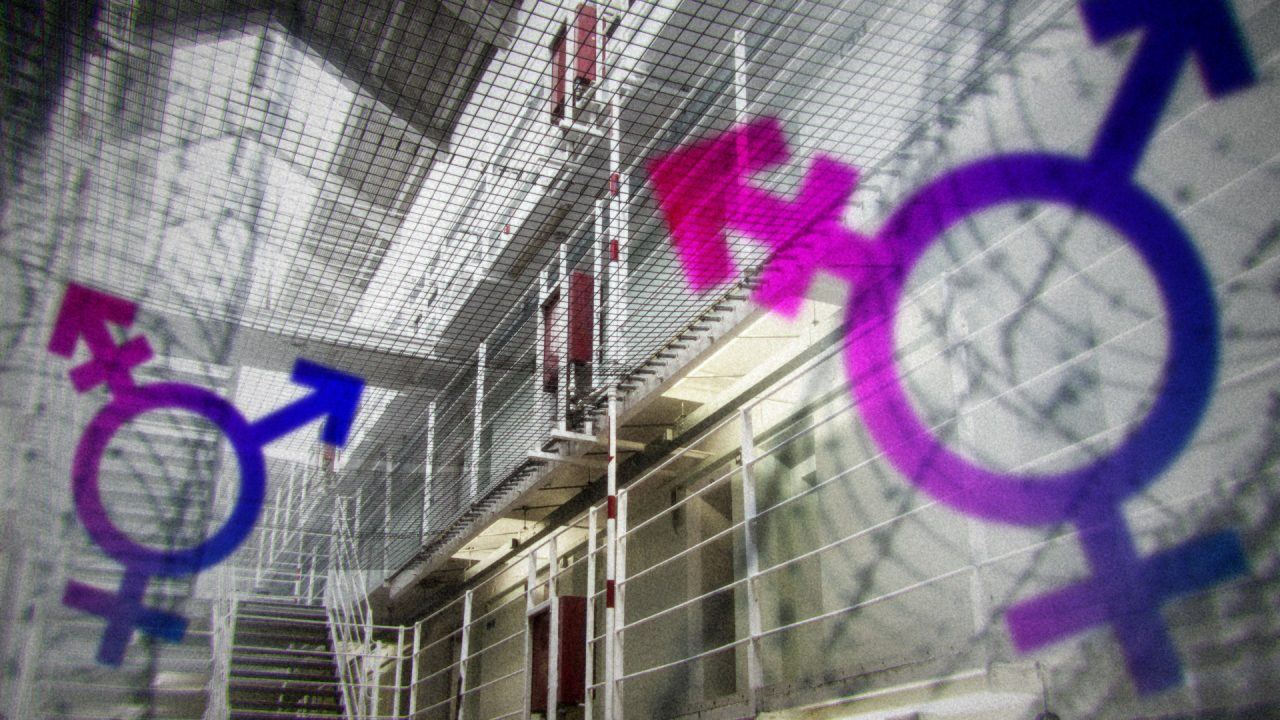
The Scottish Government has lost a legal battle over a policy of placing transgender prisoners in female jails at the country’s highest civil court.
In a case at the Court of Session, For Women Scotland won its bid to challenge the existing guidelines and to have them struck down.
The group challenged the Scottish Government’s position on the management of transgender prisoners, specifically whether they should be placed in prisons according to their biological sex or assessed on a case-by-case basis.
The policy set out by the Scottish Prison Service (SPS), an executive agency of the Scottish Government, was updated in 2024 following growing scrutiny over the case of Isla Bryson.
Bryson was initially housed in a women-only prison before being swiftly moved to the male estate following a public outcry in 2023.
 STV News
For Women Scotland argued the Scottish Government’s policies on transgender people in the justice custody system are inconsistent with a Supreme Court ruling the group previously won on the definition of a woman.
The unanimous decision determined that the terms “woman” and “sex” in the 2010 Equality Act refer to biological women and sex.
This means it does not extend to a trans woman with a gender recognition certificate (GRC) – which Supreme Court judge Lord Reed referred to as granting “certificated sex”.
In legal arguments published ahead of the Court of Session case, the Scottish Government said that a blanket ruling that transgender offenders can only be placed in a prison that matches their sex at birth risks violating their rights.
The government argued that placing prisoners in a prison for those of the opposite biological sex may be required to prevent a violation of the Human Rights Act.
Decisions on the placement of transgender prisoners are based on an “individualised assessment”, and there has been no “significant operational issue” as a result of transgender prisoners being housed in jails for the opposite sex.
On Friday, Lady Ross ruled that trans prisoners’ rights “do not extend to a right to be accommodated in a prison for the opposite biological sex”.
She ruled that “in all the circumstances, the prison’s guidance is unlawful”.
She added: “It is possible that, in an exceptional individual case, in a situation where there is a threat to life through suicide, it may be necessary to consider an argument that accommodation in a prison for the opposite biological sex is necessary.”
Susan Smith of For Women Scotland said: “We are delighted to have won such a comprehensive victory in our judicial review on Scottish prison policy.
“All the arguments from the Scottish Ministers were comprehensively rejected by the court, not least their claim that housing trans-identified male prisoners in the male estate would breach their Convention rights.
“We hope that, in future, the Scottish Government will start to listen to us rather than the lobby groups who drafted these policies and have so egregiously misled MSPs and MPs.
“We should never have needed to take this case, and we hope this will be the last time that we are forced to go to law to defend the rights of women. Ultimately, this is a victory for the very vulnerable women in the prison estate.”
What does For Women Scotland want to happen in prisons?
For Women Scotland argues that Scottish ministers have a legal duty to provide:
- Female-only prison accommodation
- Prison facilities that are separate and distinct from those for men
- They also argue that the Scottish Government must ensure that no biologically male prisoners are housed in the women’s prison estate.
A Scottish Prison Service spokesperson said: “We are grateful to Lady Ross for her judgement, which we will carefully consider, at pace, along with the Scottish Government.
“It would not be appropriate to comment further at this time.”
First Minister John Swinney said: “We will consider all of these details because there are complex issues that are involved, but at this early stage, I acknowledge the outcome of the judgement from Lady Ross and the government will consider its findings.
“We will assess the implications the judgment has on carrying out policy in relation to the handling of prisoners.
“The government will do that work and respond accordingly to the judgment that has been made.”
Follow STV News on WhatsApp
Scan the QR code on your mobile device for all the latest news from around the country