
Free university tuition and more generous benefits in Scotland may have to be cut as the country loses its funding advantage relative to England, a think tank has suggested.
The Institute for Fiscal Studies (IFS) warned the Scottish Government will struggle to pay for its flagship policies amid an increasingly strained budget unless it finds ways to collect more tax.
The economists said that in 2024-25 the Scottish Government received 26% more per resident for devolved public services than compatible services in England.
They said this was the main factor that allowed Scotland to have more generous public services, including smaller class sizes and free personal care.
However, the funding has already decreased from 32% in 2019-20 and by 2028-29 will drop to 23%.
The IFS said the fall was a result of the normal operation of the Barnett formula – the devolved funding mechanism – and not active policy decisions.
The Barnett formula sets out how much money Scotland gets when English spending – in areas devolved to Scotland – goes up or down.
The IFS said the “Barnett squeeze” came as funding for Holyrood has been rising by about 2% a year in real terms since 2019-20 – something it said was “not inconsiderable” but a slower amount than in England.
Looking ahead, it said the squeeze will be accompanied by a “sharp slowdown” in funding growth and that on current plans, funding for Scottish public services may be no higher in real terms in 2028–29 than it is now.
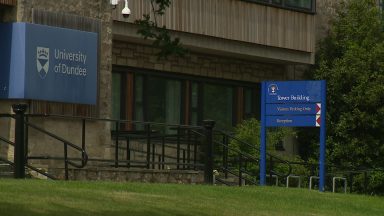
The report said the challenging state of the country’s finances means the Scottish Government would find it hard to continue to fund its more generous social policies including free university tuition.
It warned these will increasingly need a combination of bigger devolved tax intake – whether through higher economic growth or higher taxes – and more efficient public services.
Without this, the IFS warned, cuts to public services or benefits will likely be necessary.
Among the key findings from its Scottish election briefing, funded by the Nuffield Foundation and the Robertson Trust, the think tank said the Scottish Government’s budget was currently 14.3% higher in real terms compared to 2019.
It said tax rises for higher-income Scots was the biggest factor to the growing contribution of devolved funding, but added that slower wage growth since tax devolution and behavioural changes in response to the rises are estimated to have cut this number by half.
Capital funding – the type of cash that funds long-term projects such as hospitals and roads – rose by 17% in real terms since 2019, it found.
Day-to-day spending is expected to slow down to 1% a year in the three years to 2028-29, with that decreasing further to 0.3% once welfare is removed.
The IFS said the Scottish Government will face tough trade-offs as funding slows.
David Phillips, head of devolved and local government finance at the IFS and co-author of the report, said: “After falling during the 2010s, the last six years have seen real-terms increases in Scottish Government funding, mostly as a result of increases in UK Government funding. Yet UK Government decisions now mean that growth in funding is set to slow over the next few years.
“Indeed, without top-ups to UK Government spending plans, the outlook for Scottish Government funding will likely be even more challenging than official forecasts suggest – given these forecasts implicitly assume earnings and hence income tax revenues in Scotland will outpace those in the rest of the UK.
“If wages and hence tax revenues in Scotland instead grow in line with the rest of the UK, funding for day-to-day spending on public services may even be no higher in real terms in three years’ time than now.’
Martin Brogaard, research economist at IFS and co-author of the report, said: “Scotland currently enjoys more generous public services than England, in large part because the Scottish Government receives around 26% more funding per person than is spent on comparable services in England.
“But after growing during the 2010s, this funding advantage is now shrinking as the so-called ‘Barnett squeeze’ bites.
“Without substantial increases in devolved revenues, improvements in public sector efficiency or cuts to other spending, it will be increasingly difficult for future Scottish governments to continue to provide a wider range of free services – such as university tuition and personal care – than their counterparts elsewhere in the UK.”
IFS director Helen Miller said: “The tricky funding outlook facing the next Scottish government has important implications for assessing the proposals the different Scottish parties will make in the upcoming election campaign.
“Cuts to some taxes or increases in spending on priority items are feasible but will require tough choices elsewhere in a Scottish budget which will already be under some strain.”
A Scottish Government spokesperson said: “The Scottish Government has delivered a balanced budget every year despite the challenging financial environment we have faced.
“The decisions we have taken to ask higher earners to pay a little bit more – while ensuring most income tax payers pay less than in the rest of the UK – mean that we can support vital public services and provide free tuition, prescriptions and the Scottish child payment to help tackle child poverty.
“We will continue to focus resources to support our strategic priorities whilst maximising opportunities for economic growth, embedding a strategic approach to tax and reforming our public services.”
Follow STV News on WhatsApp
Scan the QR code on your mobile device for all the latest news from around the country