Key Points
-
 MSPs have voted against a Bill that would have legalised assisted dying in Scotland following an emotionally charged debate at Holyrood
 - The proposed legislation, introduced by Liam McArthur, was rejected after a free vote in which MSPs were asked to follow their conscience rather than party lines.
- This marks the third time assisted dying legislation has failed in the Scottish Parliament, following previous attempts by Margo MacDonald and Patrick Harvie.
- The Bill sought to allow terminally ill adults with decision-making capacity to request medical assistance to die
- MSPs voted last week to put a six-month or less prognosis requirement on people wanting an assisted death
MSPs have rejected a Bill that would have made Scotland the first country in the UK to legalise assisted dying.
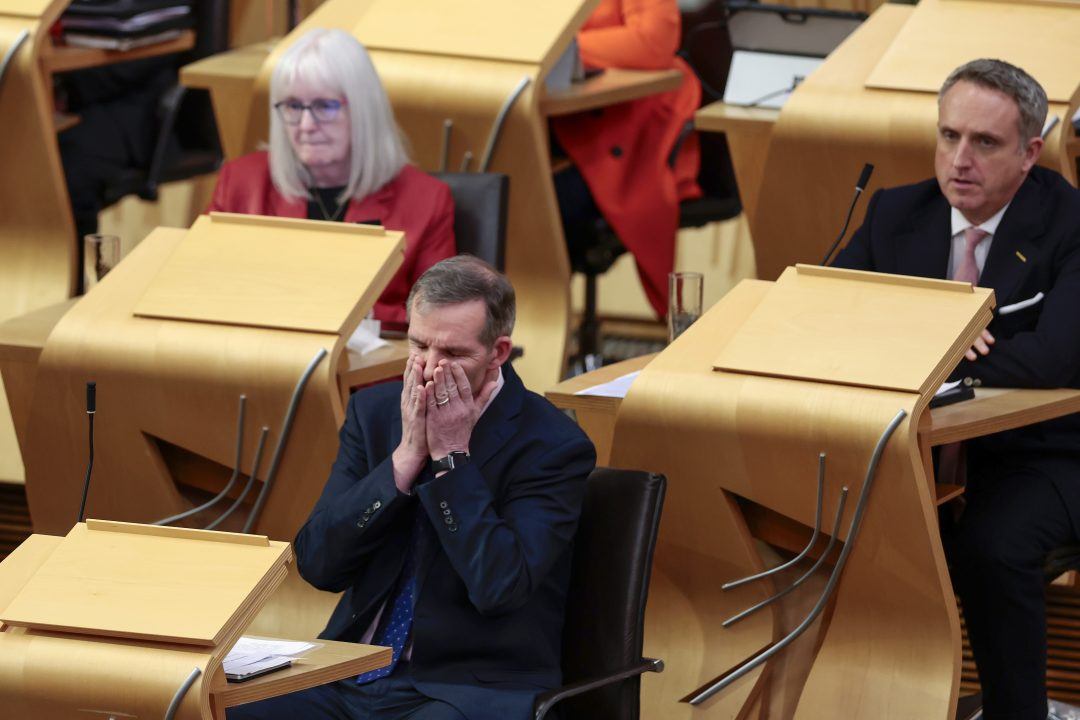
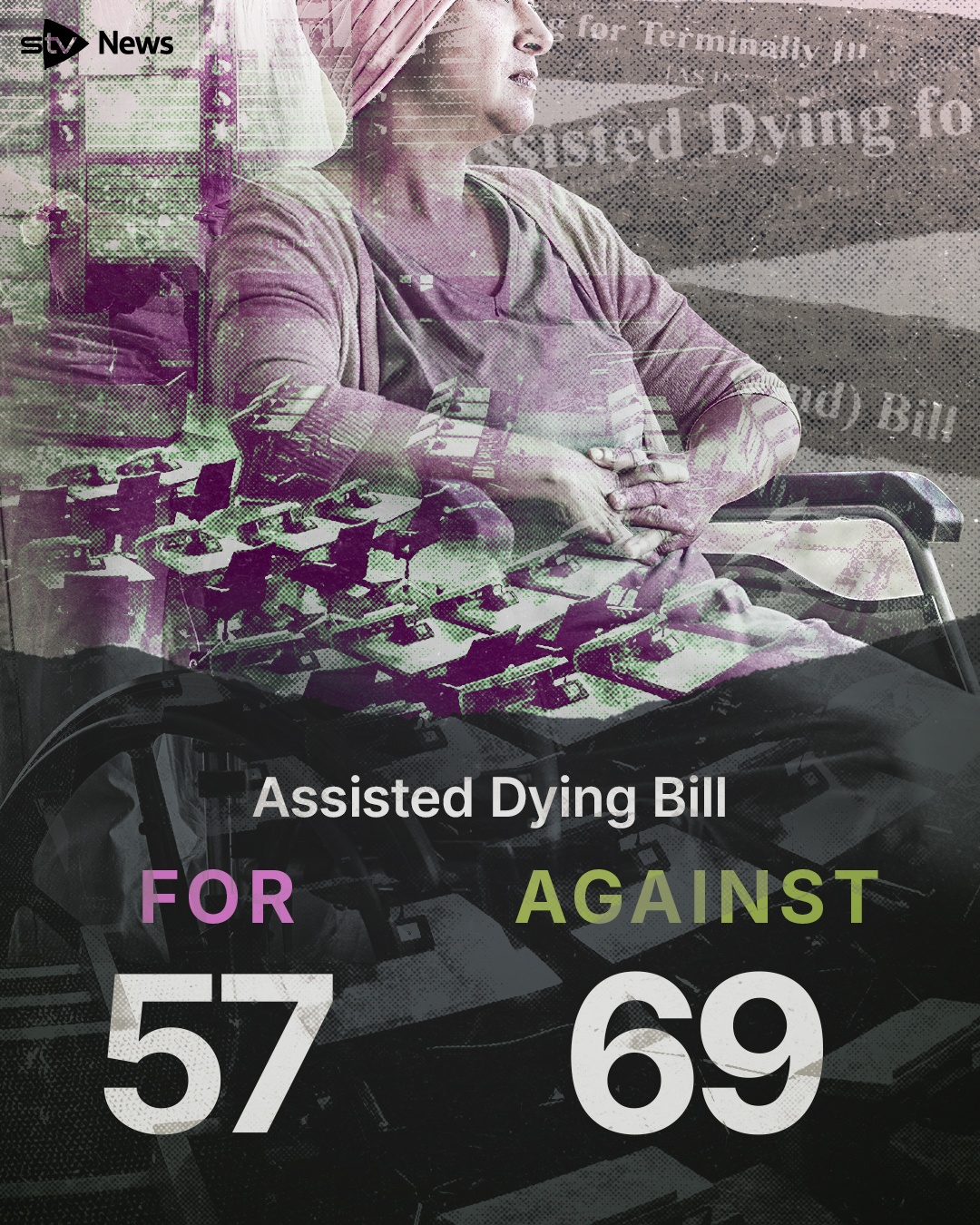
In a historic late-night sitting at Holyrood, members voted against Liam McArthur’s Assisted Dying for Terminally Ill Adults (Scotland) Bill by 69 votes to 57, with health secretary Neil Gray having announced earlier in the day he would abstain.
All MSPs were given a free vote – rather than being whipped along party lines – and were asked to vote with their conscience.
 STV News
This is the third time that assisted dying legislation has failed to pass through the Scottish Parliament.
Previous moves by the late Margo MacDonald and Scottish Green co-leader Patrick Harvie failed, while former Lib Dem MSP Jeremy Purvis did not receive enough support to introduce a similar Bill in 2004.
Members were asked if terminally ill adults with decision-making capacity should be allowed to seek medical help to die.
MSPs spent dozens of hours debating the Bill late into the night over several days last week, including during a rare sitting on a Friday.
They accepted 175 amendments to the Bill, including one that reduced the period in which a person would be “reasonably expected” to die to six months.
After an emotionally charged debate on Tuesday, enough MSPs voted against the Bill to prevent the legislation from becoming law.
Opponents had raised concerns about the impact the legislation could have on vulnerable and disabled people, while others raised concerns about a lack of safeguards for medical professionals opting out of the process.
Key Criteria of the Bill
- Two doctors will need to independently certify someone is both terminally ill and has the mental capacity to request an assisted death
- Only those who have lived in Scotland for at least 12 months will be eligible
- They must be registered with a GP in Scotland
- There must be at least two weeks between a request being made and the necessary medication being provided
- The patient must have the capacity to take the life-ending medication themselves
Initially, McArthur’s Bill would apply to those aged 16 or older and who have been resident in Scotland for at least a year.
But the Bill was amended to raise the minimum age requirement to 18.
Only people who have lived in Scotland for at least a year would be eligible and people would need to have two doctors certify they have a terminal illness and the mental capacity to request help to die.
What has been the reaction?
Minutes after the vote, McArthur said he was “devastated” about the result.
He added: “I think for those whose stories and voices I’ve carried with me for the last five years, I think it was an opportunity for parliament to right a wrong, address something that has clearly been failing dying Scots for far too long.
“We had an opportunity to address that and parliament didn’t take that opportunity. This issue isn’t going away, I think the numbers affected by the sorts of cases you heard aired in the chamber this evening are only going to increase.
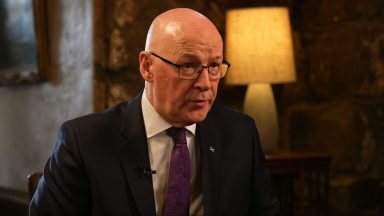
First Minister John Swinney said Tuesday’s debate was “very significant” and had been “incredibly well handled by MSPs”.
He said: “I obviously have my own personal opinion and I am, therefore, relieved that that conclusion has been arrived at.
“But I understand tonight there will be members of parliament who have taken a different view and supported the Bill who will be deeply sorry that that outcome has not been achieved, and I respect and sympathise with them.”
Former Scottish Greens co-leader Lorna Slater, whose father had an assisted death in Canada, told STV News she was “heartbroken” that her speech in the chamber didn’t support more people to vote for the Bill.
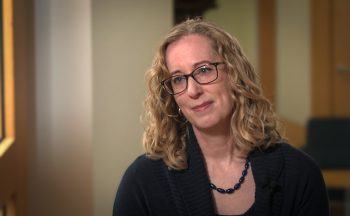

She said: “There are people in Scotland today with terminal diagnoses that have no path to a good death. They either have to starve themselves to death, or refuse treatment, or be so medicated that they can’t recognise their own loved ones to manage their pain.
“Those are bad deaths and I am so sad that I think parliament has let people down. We haven’t done what the people of Scotland want us to do and give them a path to a good death, if they choose to.”
Deputy first minister Kate Forbes said: “Although I am relieved about the outcome of tonight’s vote, I am conscious there are many MSPs who are disappointed and many members of the public who are disappointed.
“This conversation isn’t going to go away and it needs to spur all of us on to look at how we ensure there is equity of access to the best possible palliative care across the country, and that this conversation lasts until the next parliamentary term.”
Dr Gordon Macdonald, chief executive of the Care Not Killing campaign group, said: “We are relieved that MSPs have decided not to back this legislation.
“We believe the Bill posed serious risks to the most vulnerable in society – including disabled people and those suffering from domestic abuse.”
He added: “Now the debate in Scotland has been concluded, I hope we can move on to the real issue, how to care for people at the end of life, because the real scandal is that one in four people who would benefit from palliative care across our country are currently not receiving it.”
Meanwhile, Dr Stewart Weir, head of the Christian charity Care for Scotland, said: “We’re delighted members have rejected this irredeemably flawed Bill. It is a real victory for the vulnerable.”
He added: “This Bill would have opened a Pandora’s box which would have fundamentally changed healthcare across Scotland.
“There is no doubt in my mind that members have made a positive and truly compassionate decision today.”
Edward Mountain, a Scottish Conservative MSP for the Highlands and Islands region, said: “This was the correct decision.
“This bill had too many holes and posed too many difficulties.
“We must use this moment to improve palliative care, to improve the lives of disabled people, and to ensure we have a system of care that delivers for everyone.”
How does the Scottish Bill differ from the proposed legislation in England?
The current bill to legalise assisted dying in England and Wales was passed by the Commons in June last year but has been stalled in the House of Lords for months and is now unlikely to pass.
Assisted suicide is banned in England, Wales and Northern Ireland, with a maximum prison sentence of 14 years.
In Scotland, it is not a specific criminal offence, but assisting the death of someone can leave a person open to being charged with murder or other offences.
Labour MP Kim Leadbeater formally introduced her Terminally Ill Adults (End of Life) Bill to the UK Parliament in October 2024 – applying only to England and Wales.
Last June, MPs supported The Terminally Ill Adults Bill by 314 votes to 291 and it went to the House of Lords for further scrutiny.
However, with only three of 14 days of debate in the Lords remaining, around half of the amendments are yet to be discussed.

Insight Colin Mackay Political Editor
The result is much more decisive than really anyone was predicting, even me. I predicted that it would go this way but it even went further than I expected.
57 votes for and 69 votes against, it’s almost a direct reversal of what the vote was at stage one – 70-56 at that point.
By my calculations, that means 12 MSPs switched sides. Obviously, it would have been more historic tonight for the Scottish Parliament if MSPs had voted in favour of assisted dying, but they didn’t.
The interesting thing from Liam McArthur, who sponsored this Bill, is that this is not the end, this will come back.
Given the change over the years, in terms of the growth of support for this Bill and the growth in the public support for this legislation, it will definitely come back.
Follow STV News on WhatsApp
Scan the QR code on your mobile device for all the latest news from around the country