 PA Media
Scotland’s Lord Advocate has been accused of misleading Holyrood after she failed to reveal details of a memo to the First Minister outlining details of the embezzlement charge against his party’s former chief executive.
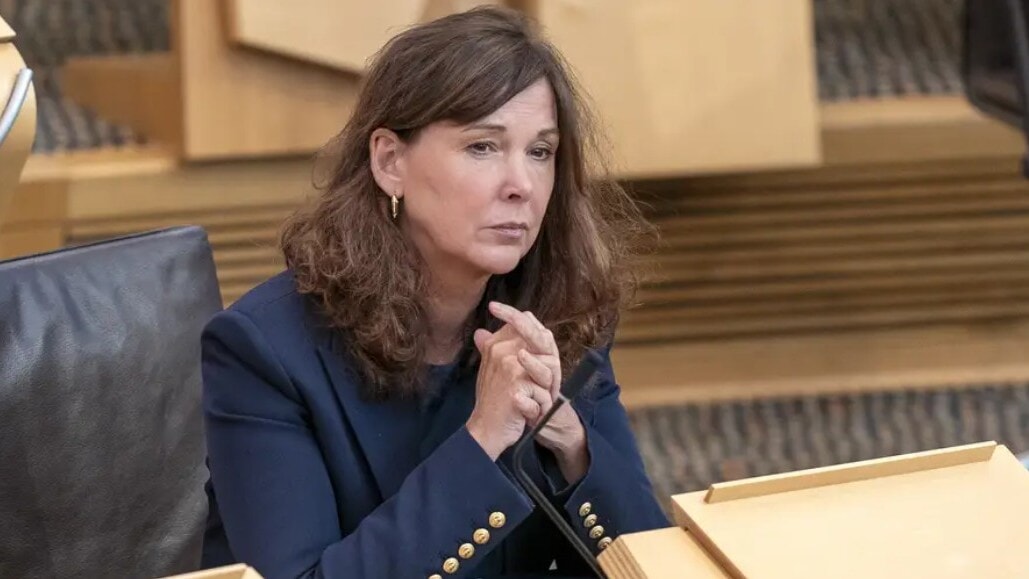
Scottish Tories hit out at Dorothy Bain KC after she appeared at Holyrood for the second time in just over a week to answer an urgent question about information supplied to John Swinney.
She had already told MSPs about a memorandum she sent the First Minister in January this year, telling him Peter Murrell – the former husband of Nicola Sturgeon – was facing a charge of embezzling almost £460,000 from the party.
But it emerged on Tuesday she had sent a memo to the First Minister in March 2025 outlining the scale of the embezzlement charge – with this coming almost a year before such details became public knowledge.
Scottish Conservative MSP Stephen Kerr put it to the Lord Advocate that by failing to tell Holyrood about the March 2025 memo last week her answers had been “shown to be incomplete and therefore misleading to Parliament”.
Mr Kerr continued: “The First Minister was in possession of information that was not in the public domain.
“There was no reason for the First Minister to be given this information regarding a politically sensitive court case.
“The public did not know yet the First Minister knew the nature of the charges and the scale of the alleged sum from March 2025.”
Ms Bain however explained to Holyrood that when she was called to the chamber last week she had not “in the time available before answering the urgent question, seen the March 2025 document”.
The Lord Advocate insisted: “I had not seen the document since it was sent.”
She defended her passing of information to the First Minister, saying: “The Lord Advocate does not brief political parties, the Lord Advocate advises constitutional office holders of information they require to be aware of.”
She stated: “As I have explained the lord advocate of the day may provide the first minister of the day, or indeed prime minister or other minister, with appropriate information on case work or investigations.
“This is done irrespective of the political party of the recipient of the information. It is done in the proper administration of the legal system.”
Her comments came after Mr Swinney also said it was “entirely appropriate” for her to give information to him on the “sensitive” case.
Tories have claimed the memos show “sleekit Swinney” was getting “secret information” about the “highly sensitive” case against the former SNP chief executive.
Speaking to the Press Association on a visit in Edinburgh, the First Minister said there was a “longstanding tradition” from both the current Lord Advocate and her predecessors “of advising the first minister of sensitive cases that the first minister may be asked to comment on in public”.
Mr Swinney added this was because his role involves carrying out media interviews “on a daily basis” in which he is “regularly asked questions about current and live topics”.
The First Minister said: “The Lord Advocate takes the view, properly in my view, that the First Minister needs to be advised of the status of particular issues, so that I don’t inadvertently say anything that can damage any cases that have been taken forward.
“That’s a longstanding principle. The Lord Advocate has applied it in this particular issue and in other issues and it is an entirely appropriate course of action for the Lord Advocate to take.”
But confirmation that Ms Bain gave the First Minister details of the embezzlement charge against Murrell ahead of this becoming public knowledge has led to accusations that she gave “political advantage” to the SNP leader, leading to fresh pressure on the Scottish Government to split the dual role of the Lord Advocate – who as an adviser to ministers sits in the Scottish cabinet, but is also the country’s most senior prosecutor.
Mr Swinney said the Scottish Government was looking at this, and would set out “further steps” in due course.
However, he stressed the dual nature of the role of Lord Advocate was created by the Scotland Act of 1998 – the legislation which established the devolved Scottish Parliament – with the First Minister saying this “is a reserved piece of legislation”.
Despite this he said the Scottish Government had “undertaken research work by commissioning analysis of the issues around the holding of the dual role of the Lord Advocate”.
Mr Swinney said: “Ministers are currently considering that research report and we will set out what further steps will be taken in due course.”
Follow STV News on WhatsApp
Scan the QR code on your mobile device for all the latest news from around the country