
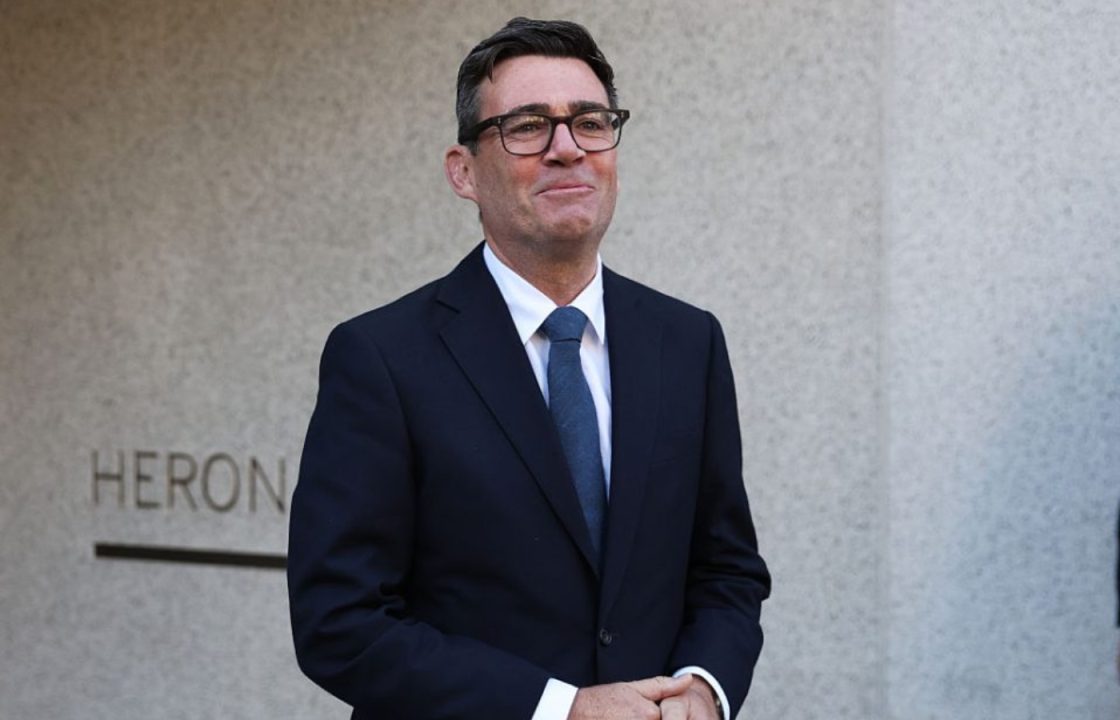
New Prime Minister Andy Burnham has only been in the job for ten days, but he has already made a raft of announcements.
So far, most of these have involved devolved issues, meaning that the changes he is planning to introduce south of the border won’t take place in Scotland.
Today’s announcements on social care are no different: the Scottish Government has social care powers and so Burnham’s plans to reform the system won’t directly impact Scotland – but might they have an indirect influence?
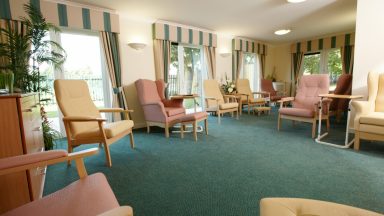
On Wednesday, Burnham visited a care home in North London to set out his first steps in reforming the care sector. Following on from comments he made in an interview at the start of the week about care being a top priority, the Prime Minister said he will bring forward the publication date of the Casey Commission, a report into the current state of adult social care in England.
He has a personal connection to this, having spoken fairly candidly about his family’s experience with his father’s dementia – and the fact his dad doesn’t know he has become Prime Minister. Burnham will also conduct an immediate review into improving the fair pay agreement and hold immediate cross-party talks on social care.
It’s this last announcement, however, that has proven a sticking point. Sir Ed Davey, the leader of the Liberal Democrats and a vocal advocate for social care reform, will join virtually as he is currently in France with his family.
Conservative Party leader Kemi Badenoch also cannot join due to a medical appointment, and appearing in her place will be shadow health secretary Stuart Andrew. Despite getting the call-up, the Tories are frustrated by the short notice.
And the new Prime Minister has ruffled feathers by snubbing other party leaders, including Reform UK’s leader Nigel Farage and the Green party leadership, whose health spokesperson raised the issue in a letter to Burnham today. Even the SNP has expressed disappointment at its lack of invitation, despite social care being devolved.
The SNP says that it should be included if UK-wide taxes are being introduced to pay for care reforms. However, if the UK Government increases spending in a devolved policy area, such as social care, then, according to the Barnett formula, Scotland will receive more cash to spend on devolved areas.
At this point, it remains unclear exactly how the UK Government would pay for any radical reforms to social care – and it is important to point out that the ‘radical reform’ the SNP is worried about being cut out from has not actually been announced yet: today’s speech was very much a starting point. But while it was a speech focused on care in England, it raises questions about the state of social care in Scotland.
Andy Burnham wants to introduce a national care service fully integrated with the NHS. The Scottish Government also had plans for a similar set-up, but these were dropped in January last year.
The initial national care service plans announced in 2021 – to completely remove social care staff and provision from local authorities and instead allow an entirely new agency to deliver care services – were described by then-first minister Nicola Sturgeon as being the most ambitious reform since devolution.
But this endorsement didn’t allay growing fears about whether the government would have the money or organisational capacity to support something like this – and these didn’t come solely from opposition politicians. Council body Cosla, alongside trade unions, withdrew its support for the project, while NHS health boards and carer groups made clear their worries about the viability of the plans.
The Care Reform (Scotland) Act was passed in 2025, and while it brought forward positives such as a digitally integrated care record and record-sharing between social care and health care services, the central tenet of a national care service was missing.
Despite the services being managed differently, the relationship between the social care sector and the NHS is significant. Hospital backlogs can severely impact A&E waiting times, and in turn the availability and response time of ambulances.
These are linked to ‘bed blocking’ – where patients suitable for discharge are unable to vacate their hospital bed because of inadequate community care provisions. In Scotland, instances of this have risen by 4% on last year, according to Public Health Scotland data.
In May, 1,925 patients had delayed discharges from hospital – a figure that has remained broadly stagnant over the course of the year – with the median delay length at 29 days, around a month. Meanwhile, recent reports reveal that more than 9,000 people in Scotland are still waiting for either a social care assessment or a home care package.
The SNP has urged Burnham to remember that it ‘stands ready to work constructively’ with him. As well as discussions about how the new Prime Minister plans to raise money for the gargantuan task of social care reform, the party of government in Scotland could find benefit in hearing about the practicalities of his plans – and figuring out what, if anything, they could replicate in Holyrood.
Follow STV News on WhatsApp
Scan the QR code on your mobile device for all the latest news from around the country