 STV News
The deaths of three people in a train derailment in Aberdeenshire could have been avoided if a drain had been constructed and installed properly, a sheriff has found.
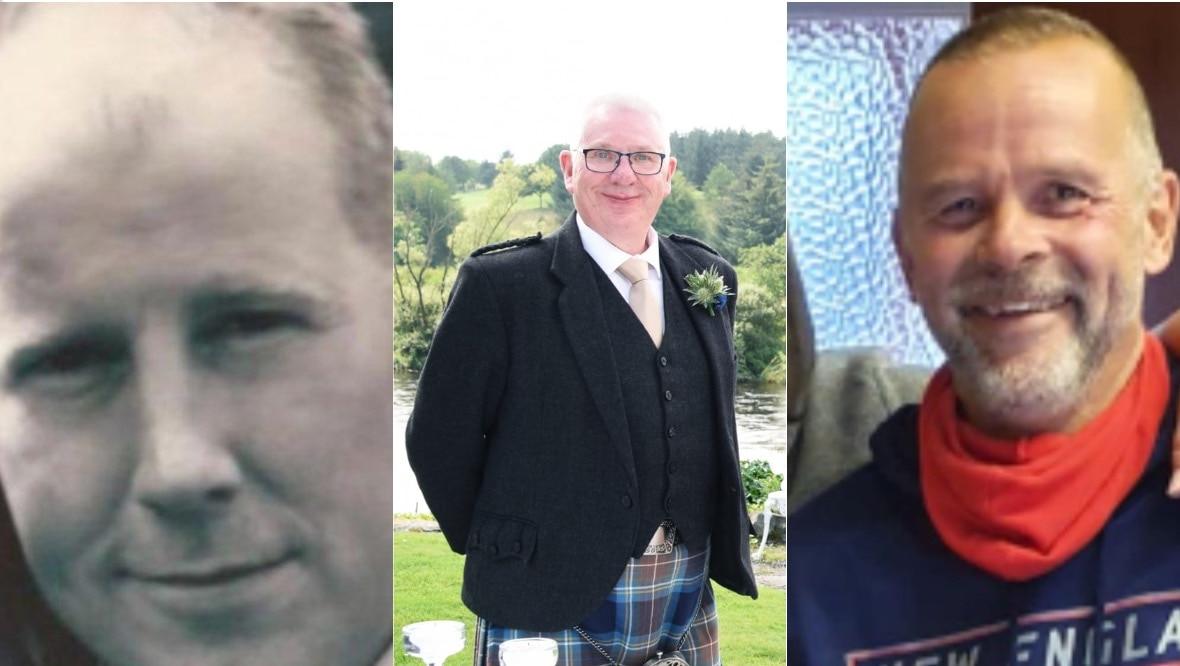
Train driver Brett McCullough, conductor Donald Dinnie and passenger Christopher Stuchbury died in the crash at Carmont, near Stonehaven, on August 12, 2020.
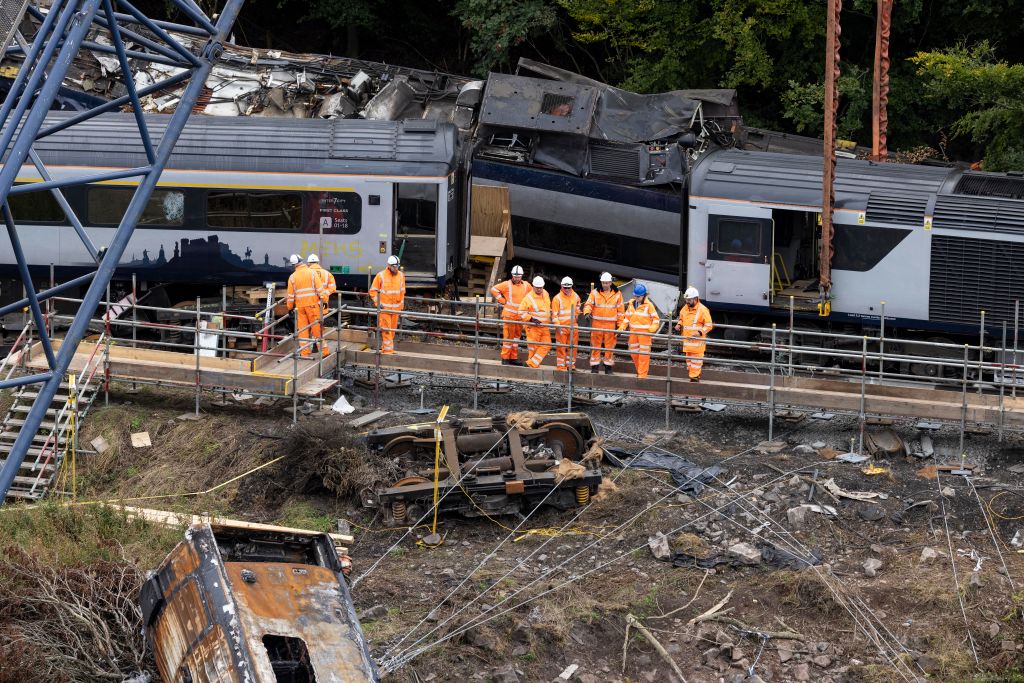
The 6.38am service from Aberdeen to Glasgow derailed on the line to Dundee after hitting debris washed from a drain following heavy rain.
Six passengers and three railway employees, one of which was travelling as a passenger, were on board at the time of the incident.
Mr Stuchbury, Mr Dinnie and Mr McCullough suffered multiple non-survivable blunt force injuries.
The other six passengers were also injured.
Network Rail was fined £6.7m in a criminal prosecution in 2023 after it admitted health and safety failings over the crash, which happened on a day of torrential rain.
Findings
A Fatal Accident Inquiry heard that the derailment was caused by the train striking debris washed onto the railway track from a drain following a period of very heavy rainfall, whilst the train was travelling at 73mph.
Carillion Construction Limited had been instructed by Network Rail to build a new drain in the area of the derailment, with the design prepared by Ove Arup and Partners.
However, the drain was not constructed and installed in accordance with the design and, as a result, could not accommodate the flow of surface water during intense rainfall in the area on August 12, 2020.
 STV News
Network Rail was unaware that the drain had not been constructed as designed and did not take action to correct it.
Sheriff Johnston found that if Carillion had constructed the drain in accordance with the design and had not built a bund at the drain site, which formed no part of the design and was the significant cause of the drain’s washout, the deaths could have been prevented.
It was also found that Carillion failed to prepare “as built drawings” of the new drain and provide them to Network Rail.
Carillion went into compulsory liquidation in January 2018.
Network Rail failed to comply with its own standards in place at the time the drain was completed in 2012, which required Carillion to provide them with an “as built drawing” and a health and safety file.
Sheriff Johnston stated that Network Rail’s failure to ensure that the drain was constructed properlyand in accordance with the design drawings was a defect in a system of working which contributed to the accident, resulting in the deaths.
The inquiry also found that between March 2013 and the accident, no routine inspection was carried out by Network Rail on the section of the 2011/12 drain upslope of catchpit 18.
At the time of the derailment, route control staff in Scotland were not adequately trained in relation to the national standard for managing extreme weather.
The National Rail Weather Service was also not configured in the control room in Scotland to provide alerts in response to real-time weather data.
At the time of the derailment, control room staff had not been trained on how to use the NRWS in response to real-time weather data to assist decision-making.
Network Rail competency assessments and audits also did not detect that staff in Scotland’s control room were not adequately trained in relation to the national standard for managing extreme weather, including route coding per those standards, or in the use of the NRWS.
There was no basis for the control room to implement mitigations, such as speed restrictions, based solely on extreme rainfall, regardless of flood levels or the categorisation of certain sites as “at risk”.
In relation to the train, it was found that it did not and was not required to comply with the modern structural and crashworthiness standards.
William McKay, who had been Network Rail’s project manager for the drain build which began in 2010, told the inquiry that, as a “large, competent contractor and a key supplier”, Carillion had been allowed to “self-assure” its own work.
This meant Network Rail took only a “light-touch” approach to checking the build as it was carried out and instead relied on Carillion to provide its own assurance that it was being done properly and in accordance with the design.
He added that when Network Rail conducted a “walk-around” of the site at the end of the project, staff could not see what had been built because the drain was underground.
Recommendations
Sheriff Johnston opted not to make any recommendations following an investigation by the Rail Accident Investigation Branch (RAIB), which made 20 recommendations to the railway industry.
The sheriff said the recommendations had addressed all the ways railway safety could be improved in response to the events.
It was concluded that most of those recommendations have been implemented, with the few remaining actively being implemented.
 Getty Images
Sheriff Johnston said he was satisfied that the issues identified in both the RAIB’s report and in his inquiry either have been or are being addressed by the rail industry, and did not consider that there are any other reasonable precautions, improvements or other steps that could be taken which might realistically prevent other deaths in similar circumstances.
‘A terrible day for our railway’
In response to the inquiry’s findings, Liam Sumpter, Network Rail Scotland managing director, said: “The tragedy at Carmont was a terrible day for our railway and our thoughts remain with the families and loved ones of Brett McCullough, Donald Dinnie and Christopher Stuchbury, along with all those affected by the derailment.
“Since August 2020, we have been working hard to make our railway safer for our passengers and colleagues, to deliver on the RAIB recommendations and to fully support the FAI process to reach its conclusion.
“We have made significant changes to how we manage the risk of severe weather since the accident and to increase the resilience of Scotland’s railway.”
ASLEF Scottish organiser Kevin Lindsay said the determination confirmed the union’s worries about train safety and raised concerns over the time it took to be published.
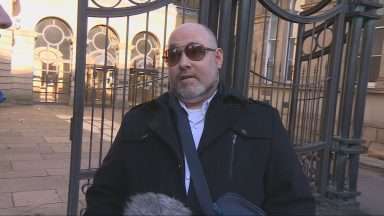
“We have consistently said throughout this process that this tragedy should never have happened”, Mr Lindsay said.
“The failings of Network Rail and their contractor Carillion, identified by the RAIB report and supported by the FAI determination, represent a staggering level of governance and corporate failure that must never happen again. We must learn from both sets of findings to ensure we never experience a tragedy like this again on our rail network.
“The determination also confirms our worries over train safety. We have relentlessly stated that the crashworthiness of the HST trains was, and continues to be, a concern. The FAI determination corroborates this and reinforces our call to urgently remove the HST from service as soon as possible.
“This FAI determination also shows that Scottish corporate homicide laws are not fit for purpose and need to be strengthened. Doing so would help ensure accidents like Carmont never happen again by holding individuals accountable.
“Corporate failure surely should result in penalties for the individuals responsible. Delivering justice requires placing responsibility on people in senior management roles and we call on the Scottish government to introduce legislation to change the law.
“Finally, we are concerned about how long this process has taken. Publishing their determination over six years after the accident is unacceptable for the families, the rail industry as a whole and the travelling public.
“The families, first and foremost, should not have had to endure this process for that long. While the public and workers in our industry, including train drivers, needed to know far sooner the full facts of what happened at Carmont and what steps were necessary to ensure their safety when travelling by train and going out to work.”
David Ross, ScotRail chief operating officer, said: “Nobody at ScotRail will ever forget the accident at Carmont and the tragic loss of Brett McCullough, Donald Dinnie, and Christopher Stuchbury. The families and loved ones of all those who have been affected continue to be in our thoughts and prayers.
“The safety of our customers and staff is our priority, and we only operate trains that meet the stringent safety requirements expected of our fleet.
“We have worked closely with our colleagues at Network Rail to implement the recommendations made by the RAIB to do everything possible to reduce the risk of something like this ever happening again.
“The Fatal Accident Inquiry has been another very important step in the process to ensure that safety lessons are learnt, and any necessary changes are made to improve safety across the railway. Along with the wider rail industry, we’ll now take time to consider the sheriff’s detailed determination, including any findings and recommendations relevant to ScotRail.”
RAIB investigation
The inquiry heard that Mr Stuchbury, who was originally travelling in coach B, was likely on his way to speak with the conductor, Mr Dinnie, in coach D when the crash happened.
Dominique Louis, a principal inspector at the Rail Accident Investigation Branch (RAIB), said it was believed Mr Stuchbury was walking through the leading vestibule at the time of the incident and received fatal injuries after being ejected through the vestibule towards the trees.
Mr Dinnie, who was in coach D, was also standing in the leading vestibule at the time of the crash, the inquiry was told.
Coach D suffered the greatest damage of any passenger vehicle.
The damage to the structural components of the carriage was such that the area of the coach where Mr Dinnie was standing collapsed, “leading to the complete loss of survival space in the leading vestibule”.
Mr Dinnie’s body could not be recovered until August 13 due to its position inside carriage D, on top of which coaches A and C came to rest during the course of the crash.
The driver, Mr McCullough, who was in the leading cab, suffered fatal injuries caused by secondary impact with the cab’s windscreen and interior.
The hearing was also told of the two survivors in coach D, who reported finding themselves outside the coach when the vehicles finally came to rest – but they could not recall how they got there.
They had also received multiple cuts and lacerations, the inquiry heard.
Coach D and C both rolled over onto their roofs before they came to rest.
Despite the severity of the fires on site – the power car and coach B caught fire as a result of the crash – none of the occupants suffered injuries.
The FAI was previously told the death toll would have “almost certainly” been higher had the train been full on August 12, 2020.
The crash took place during the Covid-19 pandemic, with the Aberdeen area under lockdown, and passenger numbers across the entire network dropped by around 65%.
Family tributes
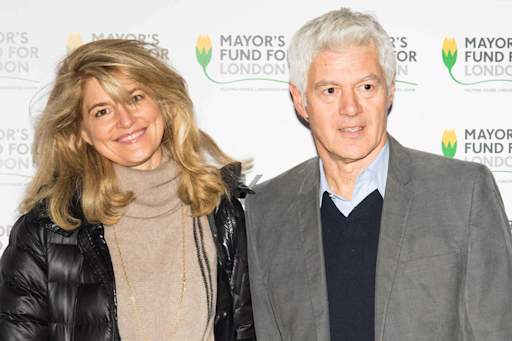
A statement written by Diane Stuchbury, Mr Stuchbury’s wife, was read out on the opening day of the inquiry.
The 62-year-old died on their wedding anniversary.
Her statement read: “Every day with Chris was a gift.
“The most loving, kind, wise, and loyal man you could ever wish to meet.
“The 12th of August used to be a special day in our house: the day we married.”
Mrs Stuchbury said the accident that claimed her husband’s life “should have never happened”, adding they “have been robbed of their future together as a couple.”
Mr Dinnie’s family said in their statement: “He was loved and adored by all his family and friends. He will be forever missed.”
Follow STV News on WhatsApp
Scan the QR code on your mobile device for all the latest news from around the country