 Forestry and Land Scotland/ Peter Jolly
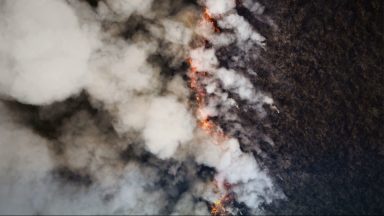
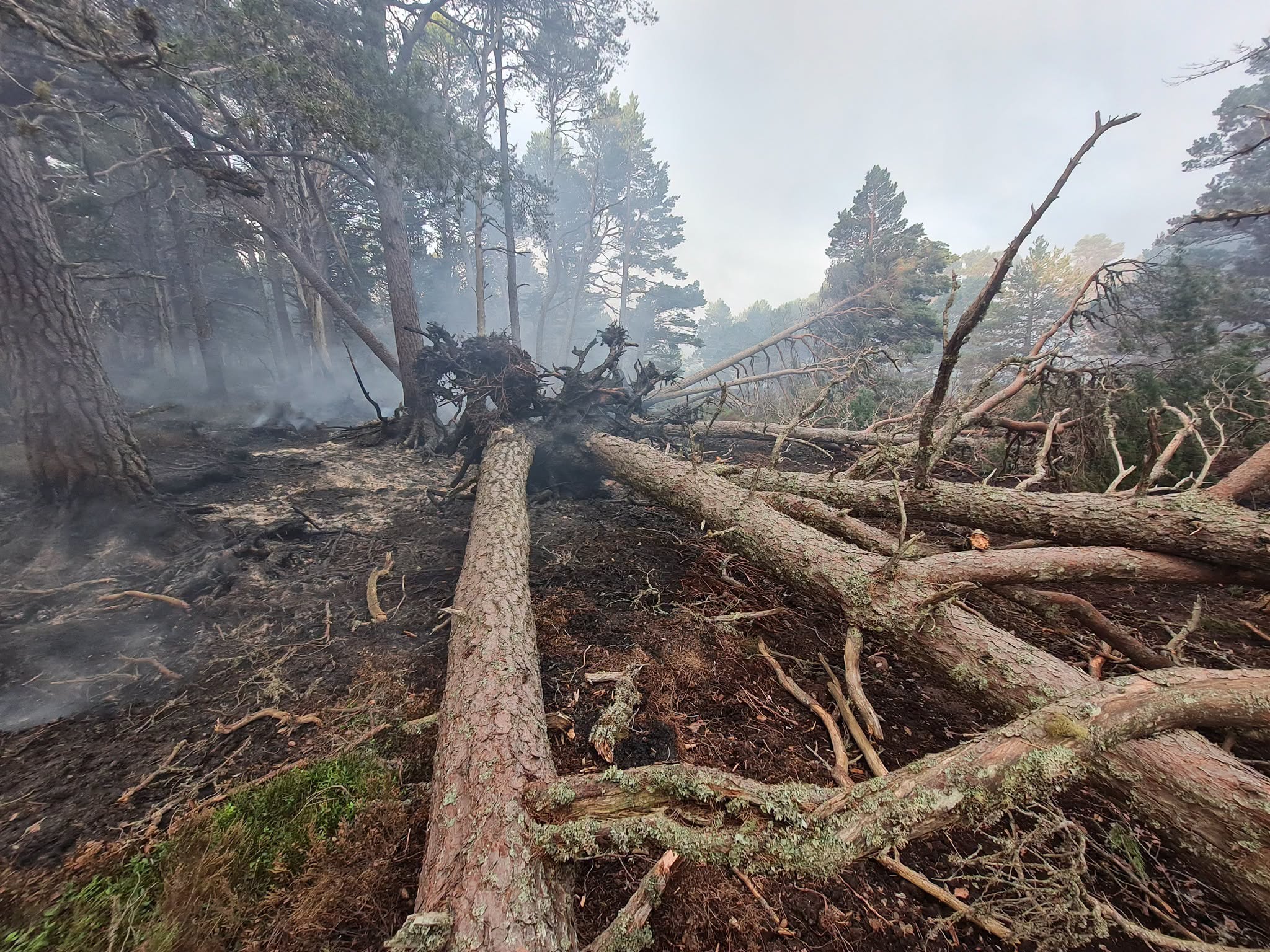
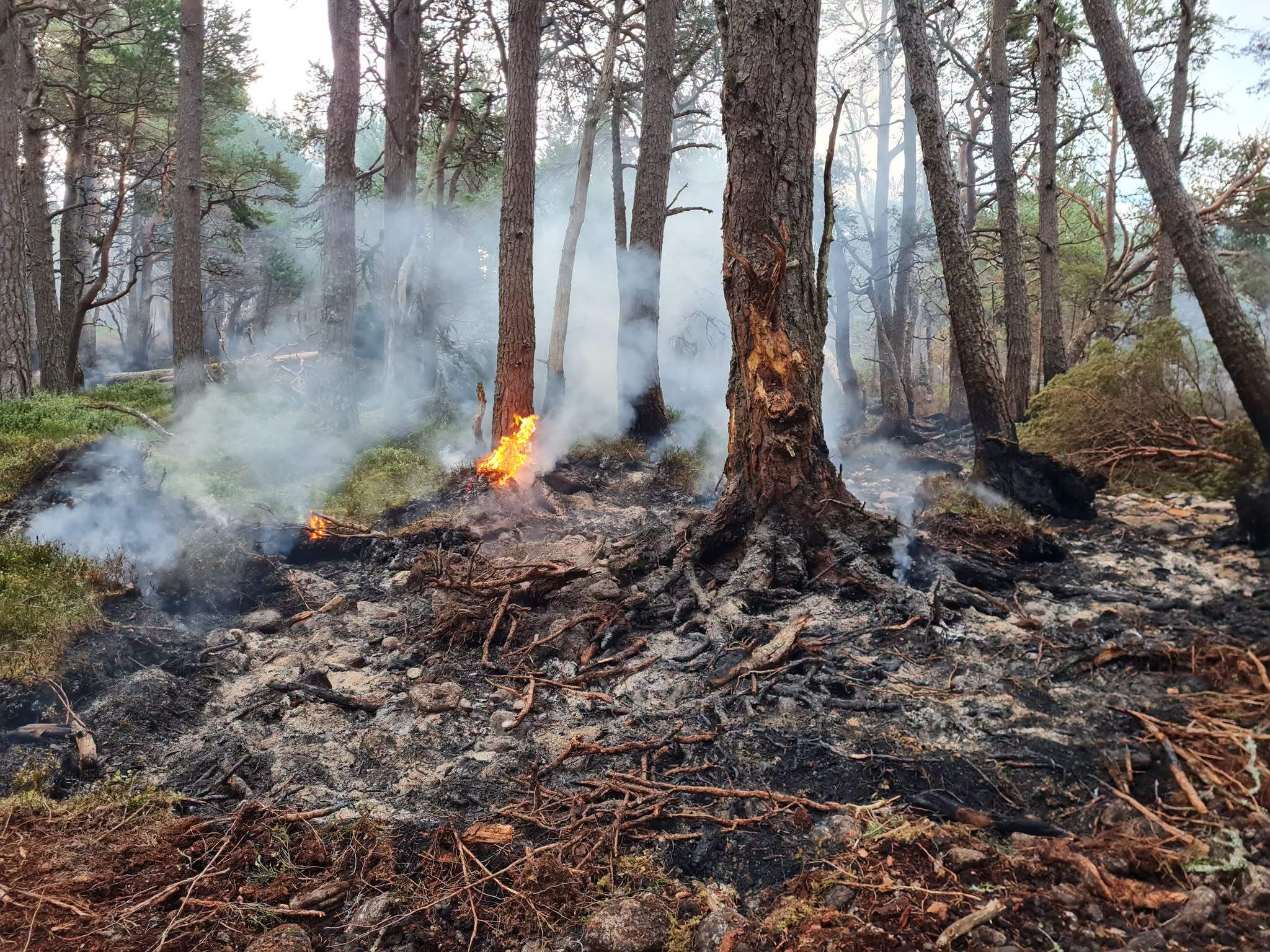
Hundreds of trees have been felled and bulldozed during the Cairngorms wildfire in a bid to stop the spread of the blaze.
Trees were brought down as part of “immediate action” to create firebreaks – strips of cleared ground to stop the fire spreading – and help protect those working to put it out.
Between the fire taking hold near Ryvoan Bothy on July 15 and helicopters arriving on the scene the following day, around 6km of firebreak was created overnight.
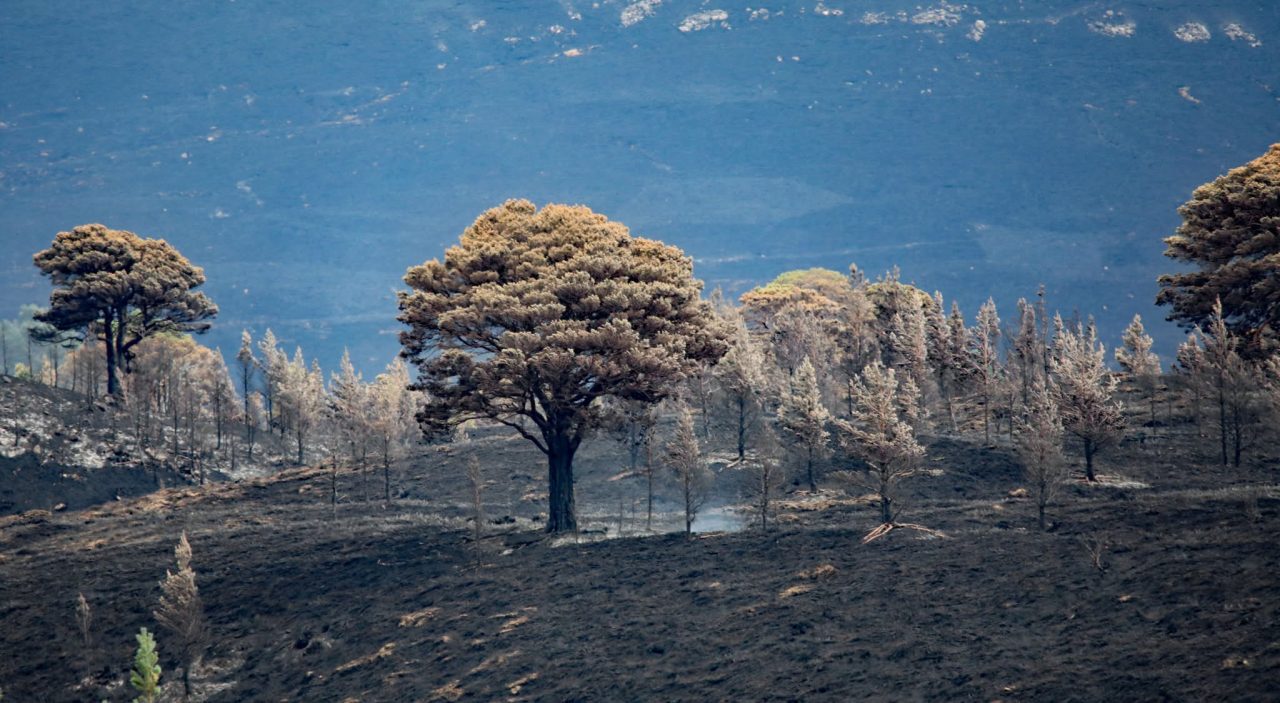
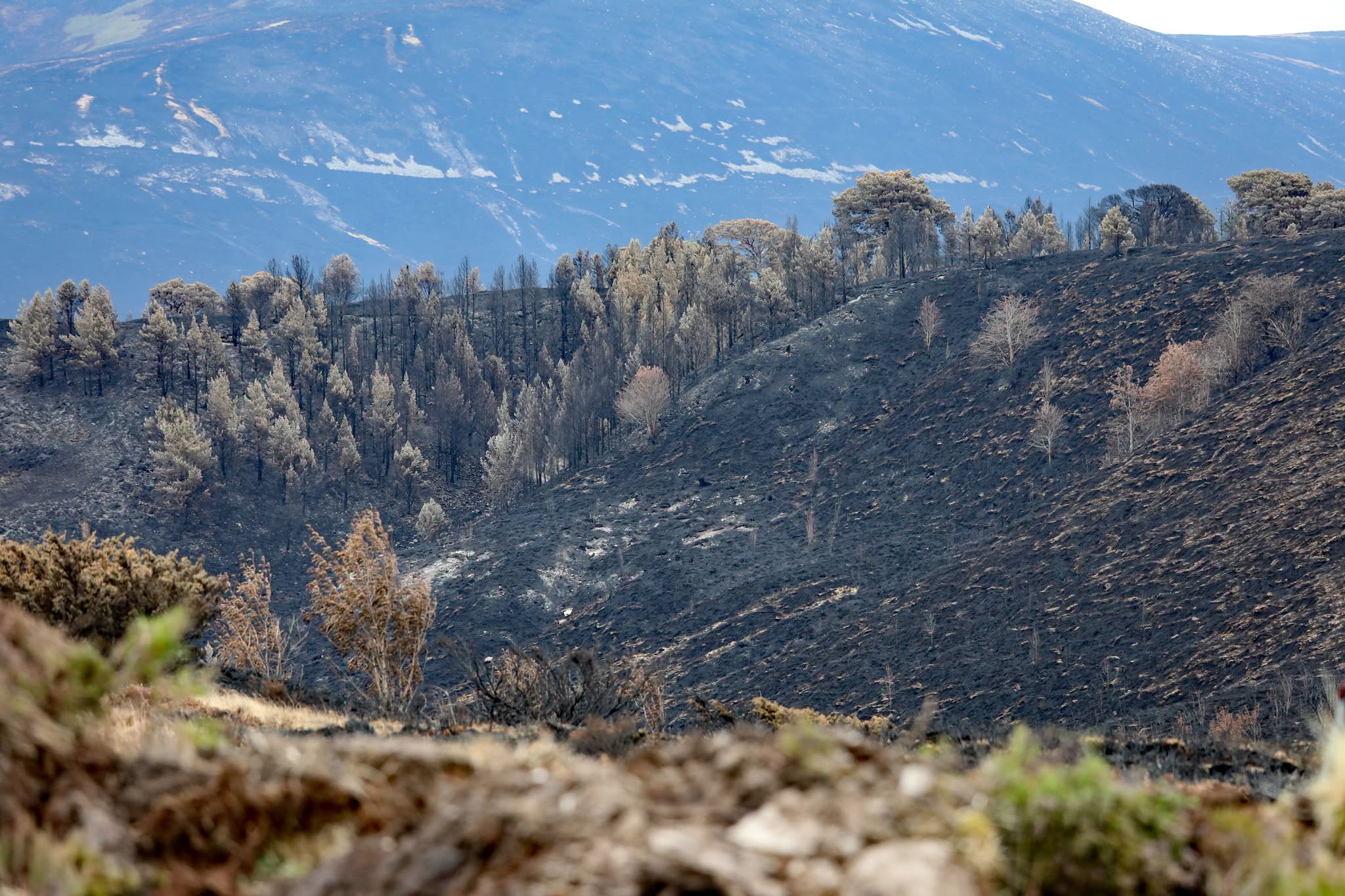
The fire is estimated to have affected an area of around 25 sq km, with huge areas of moorland destroyed and ancient pines burned.
Forestry and Land Scotland staff and contractors are now working to clear the hundreds of felled trees to remove the potential fuel load and reduce future fire risk.
 Forestry and Land Scotland/ Peter Jolly
Trees that are still standing may also have to be removed due to the fire affecting ground stability.
Alex Macleod, FLS’ north region manager, said: “FLS’ initial imperative was to secure the helicopters for water bombing but creating the fire breaks was an equally urgent priority.
“Immediate action was required and it was necessary to fell the trees without the planned care and due attention and diligence that is our usual practice. Many trees were just bulldozed to get them out of the way as quickly as possible.
“As well as being potentially unstable and presenting a physical risk, those trees might act as a fuel load, so we are getting them cut and moved as quickly as we can.
“We’re also carefully assessing the still-standing trees. The fire will have affected ground stability in some places, and some trees that no longer have a good root hold will also be removed; we have seen some trees fall over already.
“The ski road and Ryvoan trail are our priority, but we have more of this to do elsewhere, and it is likely to mean limited access to the area once the public begins to return.”
Exclusion zone
Scottish Fire and Rescue confirmed on Thursday that a phased reduction of part of the exclusion zone could begin as soon as Friday, following an agreement by emergency services.
The current cordon at Coylumbridge Hotel will move around 3km further up the Ski Road as part of a phased reopening of the area.
 Forestry and Land Scotland/ Peter Jolly
The wider exclusion zone will continue to be reviewed regularly.
Helicopter water bombing of the remaining hotspots across the fire site continues to steadily reduce the risk of a flare-up.
Monitoring with thermal imaging drones is expected to continue into the foreseeable future.
Malcolm Smith, agricultural advisor at the Cairngorms National Park Authority, who is supporting the firefighting efforts in a voluntary capacity, described a “scene of devastation”.
“Huge areas of moorland, especially some ancient pine, have been burned,” he told STV News.
“We’ve been helping out today by carrying water with our farm equipment, filling up the argos and firefighting equipment that the gamekeepers, estate workers and partner organisations have been using.
“The fire service has been doing a fantastic job. They’ve got a massive pump on the go, pumping water out of the loch and trying to cool down the roots of the old trees that have been burned.
“We also have the helicopter that has been waterbombing all day, trying to put out some of the fires.”
Rain and cooler weather has helped to reduce the spread of the fire, but emergency services are expected to remain in the area for some time to tackle the “complex and fluid incident”.
Business response
Cairngorms National Park has warned that the impacts of the incident are far-reaching, with businesses in the area millions out of pocket.
Cairngorms Business Partnership has joined a multi-agency recovery group to support businesses and people impacted by the wildfire.
 Forestry and Land Scotland/ Peter Jolly
The partnership is supporting 17 businesses affected by the wildfire in the localised Abernethy and Glenmore exclusion zone.
Craig Mills, CEO of Cairngorms Business Partnership, said: “While we are all acutely aware of the emergency response effort, the economic reality is harsh. For those directly inside the localised exclusion zone, the closure is total, meaning immediate revenue loss and significant, unavoidable costs like staff wages and fixed overheads that simply don’t stop just because the doors are shut.
“But it’s important to understand this isn’t just about the closures. Hundreds of businesses across the wider National Park that remain open to visitors this summer are also feeling the ‘ripple effect’, dealing with a high volume of booking cancellations, increased administration time spent reassuring visitors and a drop in footfall due to the general uncertainty.”
“The longer this incident continues, the greater the risk that some may not have the capacity to recover. That is why we are gathering detailed financial evidence right now to ensure we can make the strongest possible case for support and prevent permanent losses.
“We need support that acknowledges the scale of the financial hole this has left. Whether that comes through grants, business support packages, or assistance with recovery costs, it must reflect the reality on the ground.
“We’re in constant dialogue with the Scottish Government, Highlands and Islands Enterprise and the Highland Council to ensure that once this response phase ends, a robust recovery package is ready to be deployed. Our priority is making sure no business is left behind because they didn’t have the voice to articulate their needs.”
Follow STV News on WhatsApp
Scan the QR code on your mobile device for all the latest news from around the country