 STV News
Historic Environment Scotland (HES) has applied for planning permission to reinstate a path around the Callanish Standing Stones, lower a section of boundary wall and relocate fencing at the Lewis site.
The application comes amid predictions that annual visitors could increase from around 120,000 to 200,000 following the development of the Stornoway Deep Water Port cruise facility, according to figures from Urras nan Tursachan, the Standing Stones Trust.
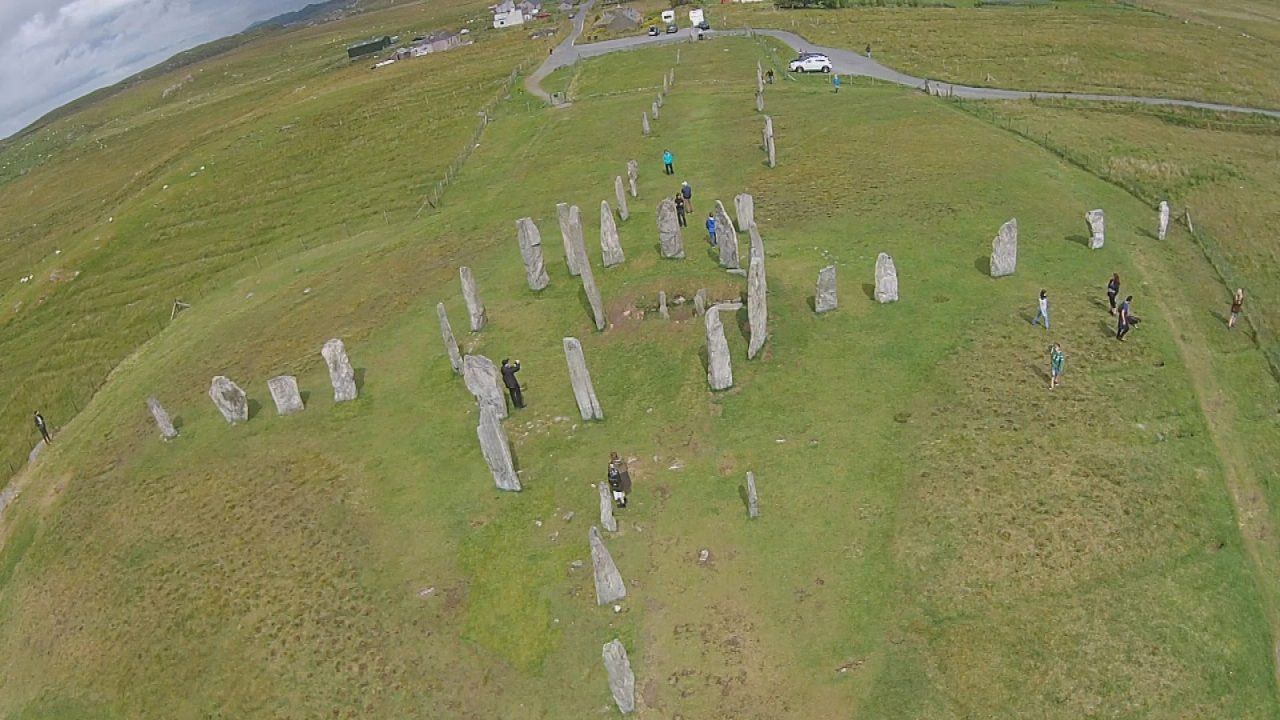
The stones, believed to date back to around 2900 BC, comprise a circle of standing stones with radiating rows and an avenue extending to the north. The HES application states there are 49 stones in total. The scheduled monument forms part of a wider archaeological landscape, including several other stone circles in the area.
A 2020 erosion survey commissioned by HES found that footfall is already causing physical damage to the monument, with the bases of the standing stones and central cairn particularly badly affected.
According to HES’s planning documents, a similar path was installed in 1993 but removed 15 years later after it failed to stop erosion. Visitors continued leaving the route to get closer to the stones. This time, HES says the path would be accompanied by a ranger service, with staff encouraging visitors to stick to the surfaced route during busy periods or when ground conditions are fragile.
The path would use locally sourced materials with no formal edging. HES says it would also improve accessibility for visitors with mobility difficulties, replacing the current uneven and often waterlogged grass.
The plans also include lowering the dry stone wall between the stones and Cnoc an Tursa, a rocky outcrop considered to be linked to the main monument. The wall, built in the late 19th century as a crofting boundary, would be reduced to dwarf height to open up views between the two scheduled sites. The entrance gap would be widened, and the existing gate would be removed.
Along the eastern boundary, the timber fencing would be replaced with slender steel posts set further downslope, moving the fence off the skyline and restoring views of the stones from nearby Callanish II and III.
A heritage impact assessment by Highland Archaeology Services, commissioned by HES, recommended that changes to the site should not interrupt “key views or alter the rural character of the site,” and its “sense of place.” The assessment found opportunities to reduce erosion, improve access for visitors with limited mobility, and improve the relationship between the stones and Cnoc an Tursa.
HES subsequently amended its initial draft proposals to reflect the recommendations. The assessment concluded that the changes would bring minor setting impacts but that the wall reduction and new fencing represent overall enhancements.
The first phase of work is expected to be completed before a new visitor centre, being built by the Standing Stones Trust, opens in spring 2026.
Follow STV News on WhatsApp
Scan the QR code on your mobile device for all the latest news from around the country