 STV News
The Cairngorms wildfire “exposed a dangerous weakness” in Scotland’s wildfire response, a report from a rural business organisation says.
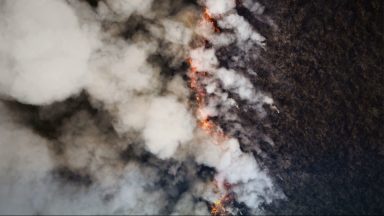
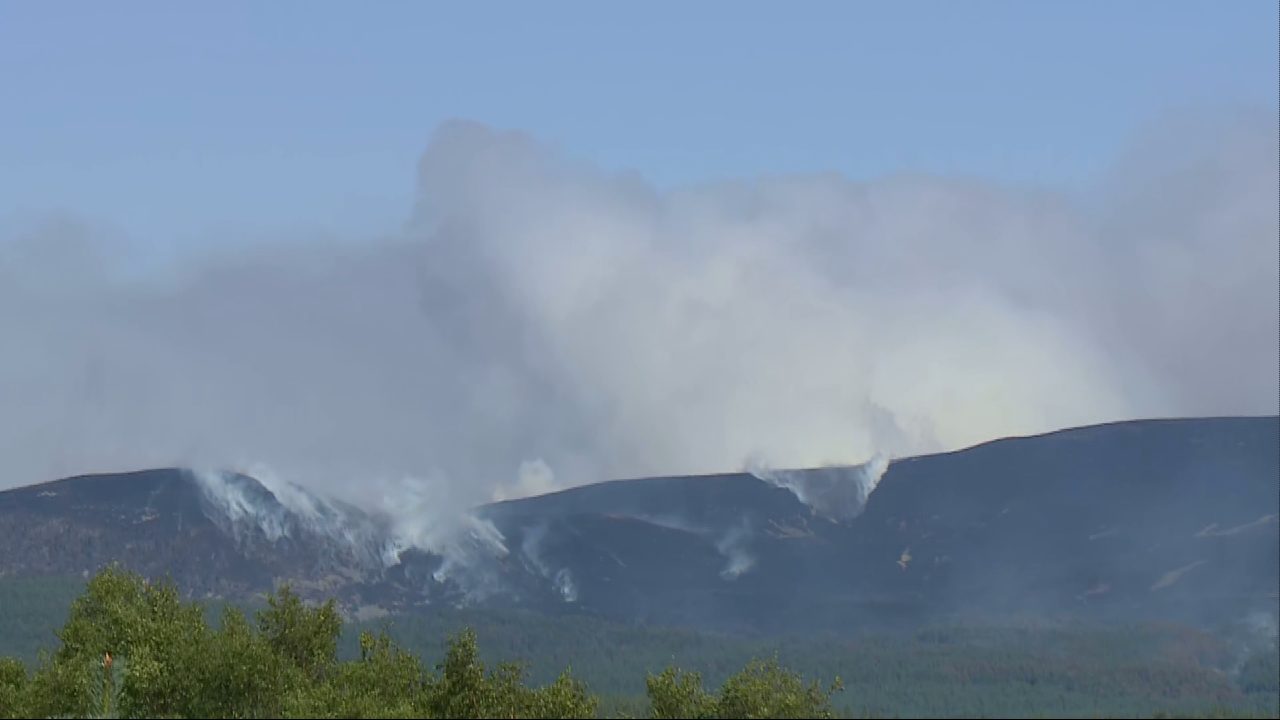
A report published by Scottish Land & Estates (SLE) has found more than 3,300 hectares were burned in the Glenmore-Strathnethy wildfire – with more than 40 businesses and organisations and £6.4 million of private-sector equipment involved in the response efforts.
The report for the Scottish Government found more than 300 days of volunteering work were recorded to tackle the wildfire as SLE is calling for an urgent shift from ad hoc assistance to a formal, exercised wildfire capability system.
The fire started in the Glenmore area near Aviemore on July 15 and saw more than 500 firefighters involved in the response, with crews leaving the scene on August 18.
The wildfire burned across 10 square miles (25 square km) of moorland and forestry.
In releasing the new report, SLE has warned that Scotland is being left dangerously exposed to major wildfires as the country relies on “goodwill and improvisation”.
Ross Ewing, director of moorland & strategic projects at Scottish Land & Estates and author of the report, said: “The Glenmore-Strathnethy fire showed rural Scotland at its best – people, machinery, local knowledge and specialist expertise made available at speed. But it also exposed a dangerous weakness in that Scotland is still relying on goodwill and improvisation when it needs a planned, exercised wildfire resilience system.
“Estates, contractors and conservation bodies are willing to play their part in future – but this must come as part of a properly planned process rather than a last-minute call as a wildfire begins to rage.”
The report calls for a dedicated helicopter and pilot services framework for wildfire response, with guaranteed availability, mobilisation standards, activation thresholds, mapped water sources, refuelling and landing options, trained liaison roles and ground-to-air communications.
It also gives the Scottish Government recommendations for muirburn licensing as it says reducing the licences could reduce investment in trained people who have fire behaviour knowledge that currently support Scotland’s rural wildfire response.
Mr Ewing continued that estates, contractors and conservation bodies have now been established as “an essential part” of the wildfire response.
He said: “Following the Carrbridge-Dava response, we have firmly established these organisations as an essential part of the national wildfire response, and their role must be identified before the next period of very high or extreme risk. That requires a system to be built to identify who has the machinery, water-moving capacity, local knowledge and helicopter access.
“We need guaranteed aerial support when risk is highest, as well as a licensing regime for muirburn that does not erode the skills and equipment Scotland depends on when wildfire breaks out. After two major wildfires in the space of just over a year, we know that the next major wildfire will not wait for us to be slow on this matter.”
The report also highlights the need for improvements in mobilisation, tasking process, communications, PPE provision and welfare.
This week, the Scottish Parliament is due to consider the growing risk of wildfires in Scotland followed by a ministerial statement on the Glenmore-Strathnethy wildfire on Thursday.
The Scottish Government has been approached for comment.
Follow STV News on WhatsApp
Scan the QR code on your mobile device for all the latest news from around the country