I first encountered the extraordinary voice of Asha Bhosle as a child when, in common with many south Asian immigrant families, Bollywood films would provide an enjoyable and often profound link back to the motherland.
We would be encouraged to watch with our parents, and as young kids, my siblings and I often found this quite torturous. The sentimental songs which went on forever were not to our taste. However, this all changed when I saw and heard the song Dum Maro Dum, being performed. It was from a 1971 film called Hare Rama Hare Krishna, set in a hippie commune in Kathmandu. In it, the superstar actress Zeenat Aman shimmies across the floor as she sings those immortal words Dum Maro Dum.
This was not the kind of Bollywood song I have ever heard before. Funky Guitar beat and teasing lyrics delivered playfully by Bhosle. I never could get my mum to tell me explicitly what Dum Maro Dum actually meant; her reluctance to spill the beans based on the fact that it basically means “go on have a drag”, and as the scene’s context was a drug den, she didn’t want to go into any details!
But this was what was so amazing about Asha Bhosle. She could sing any kind of song for any kind of film – from classical to modern.

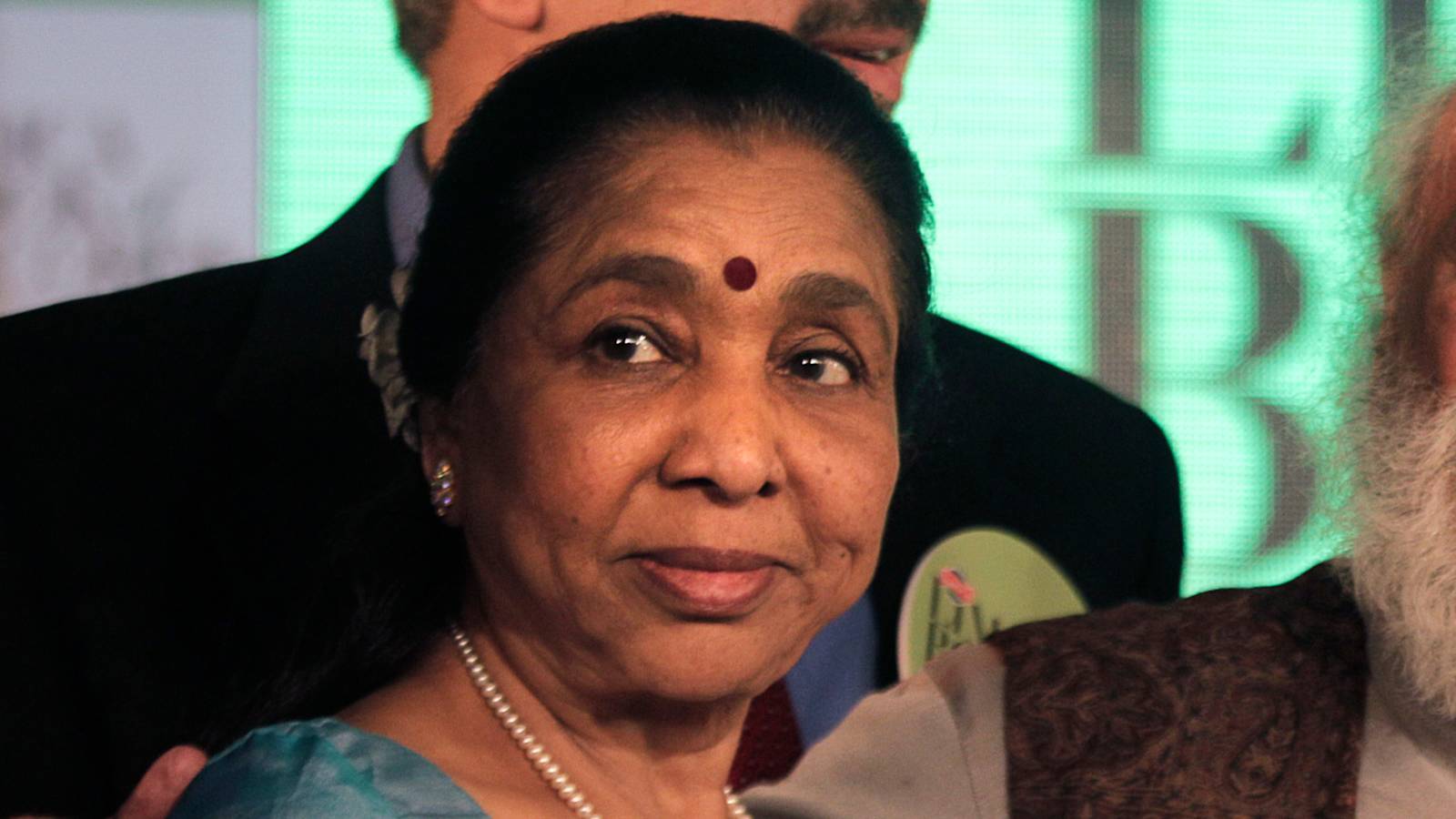
I interviewed her once, wrapped in her sari; she was so quiet, her voice so gentle, it was hard to believe this was the same voice capable of so many high-energy, sensuous songs. But then listen to her voice from the film Umrao Jaan, and the stunning song Dil Cheez Kya Hai (what is the heart worth?) – poetic ghazals were second nature to her too.
The use of playback singers was prolific and vital to the character of Indian films during what many see as their heyday in the 50s, 60s, and 70s. Indian cinema was meant to entertain the masses, give something for everyone and be a clear departure from the strains and demands of everyday working life, which for millions in India could be gruelling. Putting music in films was expected – the songs drove the narrative, bridged scenes, and often provided beauty and elaborate dance scenes. That is when the likes of Asha Bhosle and her late sister Lata Mangeshkar, also a hugely successful playback singer, would come in.
Playback singers recorded the songs so that the actors could lip sync on the screen. And Asha recorded more than any other female artist in her industry, more than 12,000 songs in all, across 10 different languages and all in a voice that was unmistakably hers. She was a Guinness World Record breaker for the number of songs she recorded in her eight-decade career.
Because of the importance of playback singers like her back in the day, they became as well-known as the A-list actors on the screen. It helped that Bhosle was married to one of the foremost film composers of his generation, R.D. Burman. What a formidable team.
“Chura Liya Hai Tumne Jo Dil Ko” (you’ve stolen my heart) from the film Yaadon Ki Baraat was one of her favourites, and typified the sweeping orchestral songs that made Bollywood such a unique force in cinema. It is simply gorgeous.
The speed at which Bhosle and her peers worked is astounding. She had a voice for every emotion, and it is little wonder that she kept working so late into her career. Her voice was synonymous with class in Indian cinema, little wonder Western artists wanted to work with her – Boy George, Michael Stipe – just this year she features on the virtual band, The Gorillaz’ new album.
When British band Cornershop wanted to pay tribute to the joy that music in films can bring, they sang “Brimful of Asha”, she is called “ Saadi Rani”, our queen.
The status of playback singers in Bollywood is different now. Technological advances in recording and editing mean that you don’t have to be a stunning singer to sound good in films; more actors are doing the singing part themselves.
So Asha Bhosle’s death at 92 is a moment of deep significance to the world’s most productive film industry. Little wonder that she is to be awarded full state honours at her funeral. Her passing marks the end of an era, when the playback singer could make or break a movie, when the likes of Asha Bhosle could hold a cinema audience in her hand.
Follow STV News on WhatsApp
Scan the QR code on your mobile device for all the latest news from around the country