 Apartura
More than 1,100 residents have objected to plans for a “hyperscale” AI data centre that would be located close to homes, a care home, a nursery, and a hospital in Larbert.
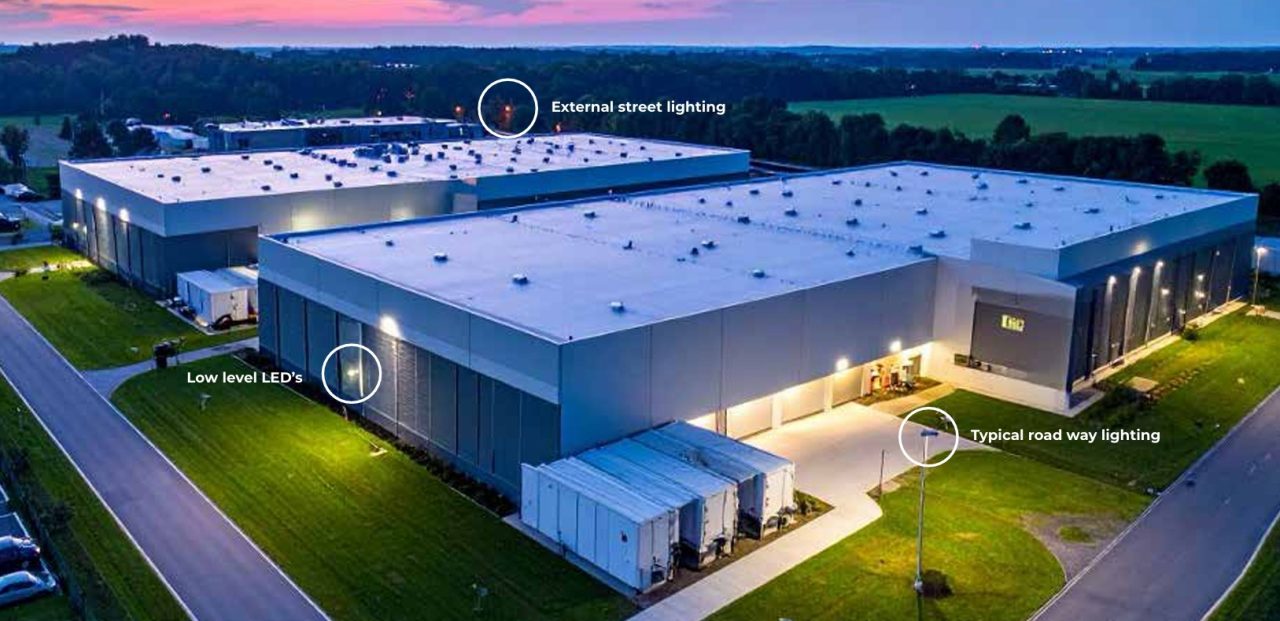
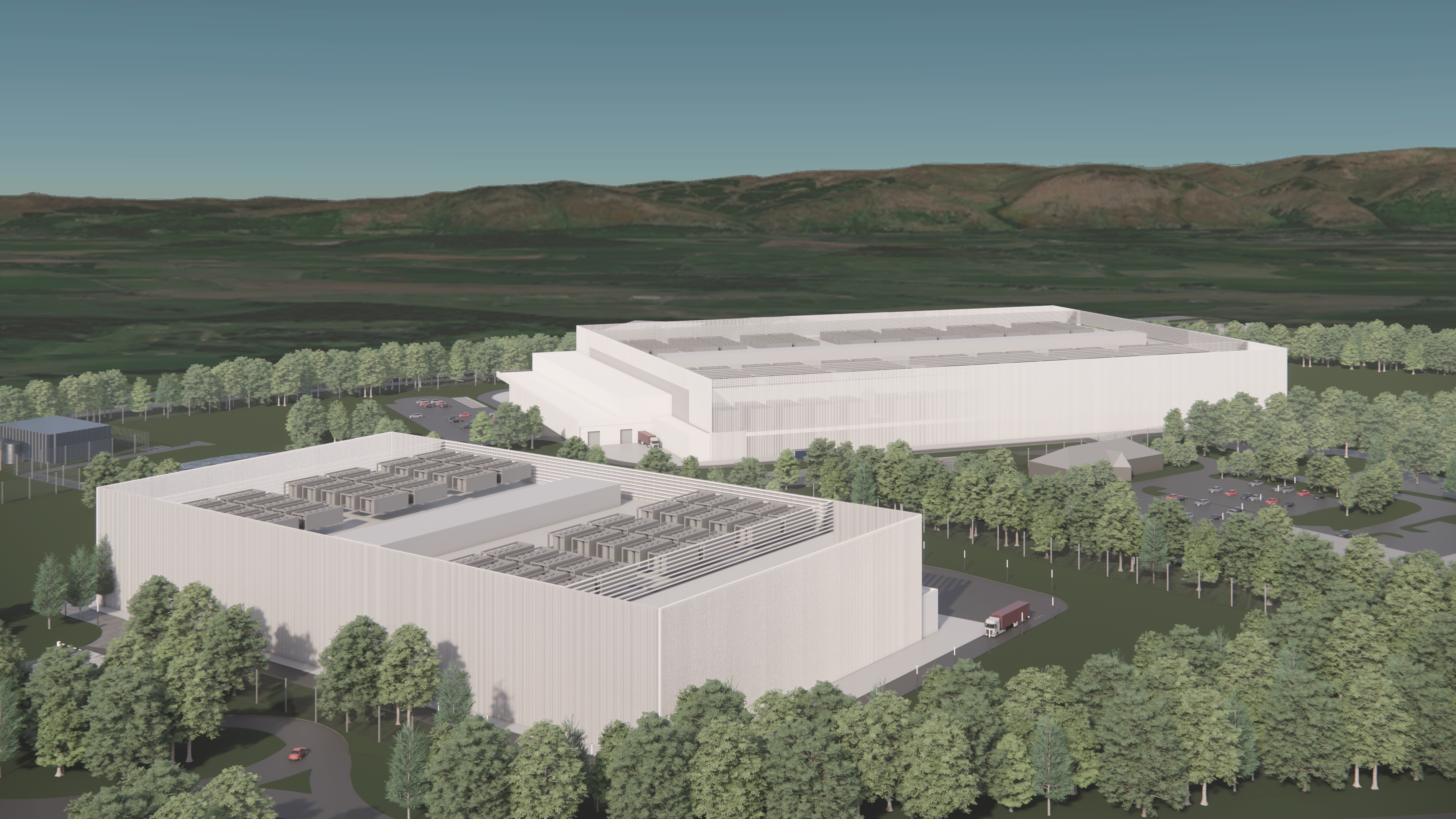
Apatura has submitted proposals to Falkirk Council for a 300MW AI data centre beside Glenbervie Business Park on Bellsdyke Road, which would be around the size of 35 football pitches.
If the massive development gets the go-ahead, it is scheduled to be completed by 2028, with operations getting under way in 2029.
In the US, data centres have developed a “bad neighbour” reputation – using vast amounts of energy and water, noise levels, spiking energy bills, and driving up emissions.
But Apatura says the regulation in Scotland is much more “rigorous”. The “green data centre” will use excess renewable energy, though would have 200 emergency back-up diesel generators, and slash water use via a closed-loop cooling system.
It’s also “district heat ready,” meaning its trapped waste heat could eventually warm local homes and businesses if a third-party partner steps in to make the connection.
Local concerns
However, environmental campaigners and residents have raised concerns over various issues, including the environmental impact of back-up diesel generators, as well as the potential effects on public health, noise levels, air quality and increasing energy costs.
Kat Jones, director of campaign group Action to Protect Rural Scotland, told STV News: “This is really huge.
“It’s a large amount of energy, and it’s the equivalent of what 300,000 households would use on a January evening, so that is a lot of energy.
“It’s coming in pretty fully formed on to this community, and I’ve been speaking to local people, and many are saying they didn’t know about it until now.
“The concerns on the back of that are in places where hyperscale data centres are being built, energy prices are going up.
“We are particularly concerned about how close it is to this care home and the hospital and, of course, the residents.
“These huge industrial buildings are not something you want to have where you live. It’s also something which I don’t think you want to have in Scotland because of the impact they have on the wider environment as well as the local environment.”
The developer also has plans for eight other data centre sites across Scotland, including a 550MW centre at Ravenscraig in North Lanarkshire, and is one of more than 20 hyperscale data centres planned across the country.
Apatura says in the planning documentation that the centre could bring “billions of inward investment, thousands of new jobs during construction, and hundreds of well-paid long-term local jobs”, such as software and electrical engineering.
It also says it would generate at least £5m a year in business rates for Falkirk Council.
But campaigners have questioned the credibility of these figures, particularly around jobs.
Jones added: “We did a report on jobs and data centres because we were seeing these huge inflated figures from the developers.
“When we went to look at what is happening globally, we found a typical data centre employs between 20 and 50 people and in fact, some of the biggest data centres in the world – there is one being built which is going to be 2GW, and that’s projected to employ 100 people.
“So where these figures are coming from I just can’t imagine. I think we need to challenge these figures because there is no data centre in the world that employs that many people.”
The developer also says it will use excess green energy drawn from a battery energy storage site to power the centre during times of low production, which would help reduce energy consumption.
But another major concern for campaigners is the need for 200 emergency backup diesel generators, with a 48-hour supply planned in case of a power failure.
Action to Protect Rural Scotland, it is the equivalent of having 106,000 idling diesel cars. The generators would be tested monthly, quarterly and annually.
 Apatura
Call for suspension on data centre proposals
Fraser Sutherland from Stop Climate Chaos Scotland and APRS say there needs to be a moratorium on building hyperscale data centres until there is clearer guidance from the Scottish Government on the impact of these centres.
He said: “The reason why this is happening is that the Scottish Government haven’t defined what green data centres are.
“I find that astonishing given the scales of these centres. This is something which they can’t just wash their hands of and walk away, and say, well, this is too difficult, it’s up to each local council.
“I don’t think that’s fair on the local councillors, given the volume of documentation they are asked to read, given the scale of these developments, given there needs to be a joined-up plan of how many developments Scotland can actually cope with in terms of energy production.
“It needs a real national response to this. We need to see stronger action from the Scottish Government to consider the impact of these centres.”
There are also concerns about the complexity and volume of documents, as well as the limited time for residents to submit their responses.
Jones added: “It’s worth saying the documents are really hard to read. It’s very difficult for local communities to get their heads around what is happening.
“It’s not a system made for people to feel like they are involved in the decision-making. Even the environmental impact assessment is in 52 different documents.”
Michael Maciocia is a local resident and is one of the people behind the Facebook group, ‘Say No To Larbert data centre’ and has organised a meeting at Dobbie Hall on June 25.
He said: “I worked for Intel for 33 years, so I have a good understanding of technology.
“I grew hugely concerned reading reports from other people that I worked with in the past, talking about data centres that had opened near them in the States.
“That included noise pollution, the fact that their electric bills were going up, and, on some days, their water pressure was decreasing to almost zero.
“No one that I have spoken to, including people within 50 metres of the development, was consulted or informed of air quality.”
A Scottish Government spokesperson said: “The Scottish Government is clear that the voices of communities that will be affected by these kinds of development must be central to any considerations, while planning authorities have a responsibility to consider the environmental implications of all developments which require planning permission.
“The Scottish Government is also clear that any new AI infrastructure development should minimise reliance on fossil fuel solutions.
“Our AI Strategy for Scotland recommends that data centre development should include steps to assess and mitigate potential risks of the infrastructure, including in relation to environmental sustainability.
“AI data centres are an evolving sector.
“This is why the National Planning Hub has been working with planning authorities, infrastructure providers and industry stakeholders to share an understanding of emerging impacts.”
Apatura’s commercial director, Michael Hunter, told STV News: “Our Larbert Data Centre is located on a site which has been designated for employment use for a number of years and is the result of an extremely well-considered design process which has been informed by community consultation and detailed technical and environmental assessment.
“The development has the potential to offer a significant boost to the local, regional and Scottish economy and is designated as ‘essential infrastructure’ by the Scottish Government.
“The process for determining the acceptability of data centre development is rigorous.
“The planning application will be examined by the Planning Authority and a range of statutory authorities and consultees, (including the general public) and judged against local and national planning policy.
“Beyond this there are a number of additional environmental regulations which the development will be controlled by in order to regulate emissions and operations.
“Indeed, Apatura is a signatory to the industry charter ‘Delivering green data centres in Scotland’ which sets out the rigorous standards against which we believe all new developments should be measured.
“Scotland has an abundance of low carbon electricity and a cool climate which makes it the ideal destination for data centres – where, by its nature, our electricity has a lower carbon intensity than anywhere else in the UK.”
A spokesperson for Falkirk Council said: “The proposal is currently subject to an ongoing regulatory planning process.
“It would not be appropriate for the council to comment on specific technical assessments or modelling at this stage.
“All environmental impacts, including air quality, will be rigorously assessed by the relevant statutory authorities as part of the planning determination process, with opportunities for public representation.
“We recognise that this is a significant application with a large amount of supporting information.
“The statutory period for comments is 21 days, ending on 2 July 2026, but the council does not operate a hard cut-off at the end of that period.
“Comments can continue to be submitted up until the application is determined, although early submission is recommended.
“As a national development, the application will be considered by the planning committee and will be subject to a pre-determination hearing before any decision is made.”
Follow STV News on WhatsApp
Scan the QR code on your mobile device for all the latest news from around the country