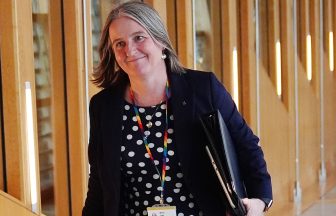
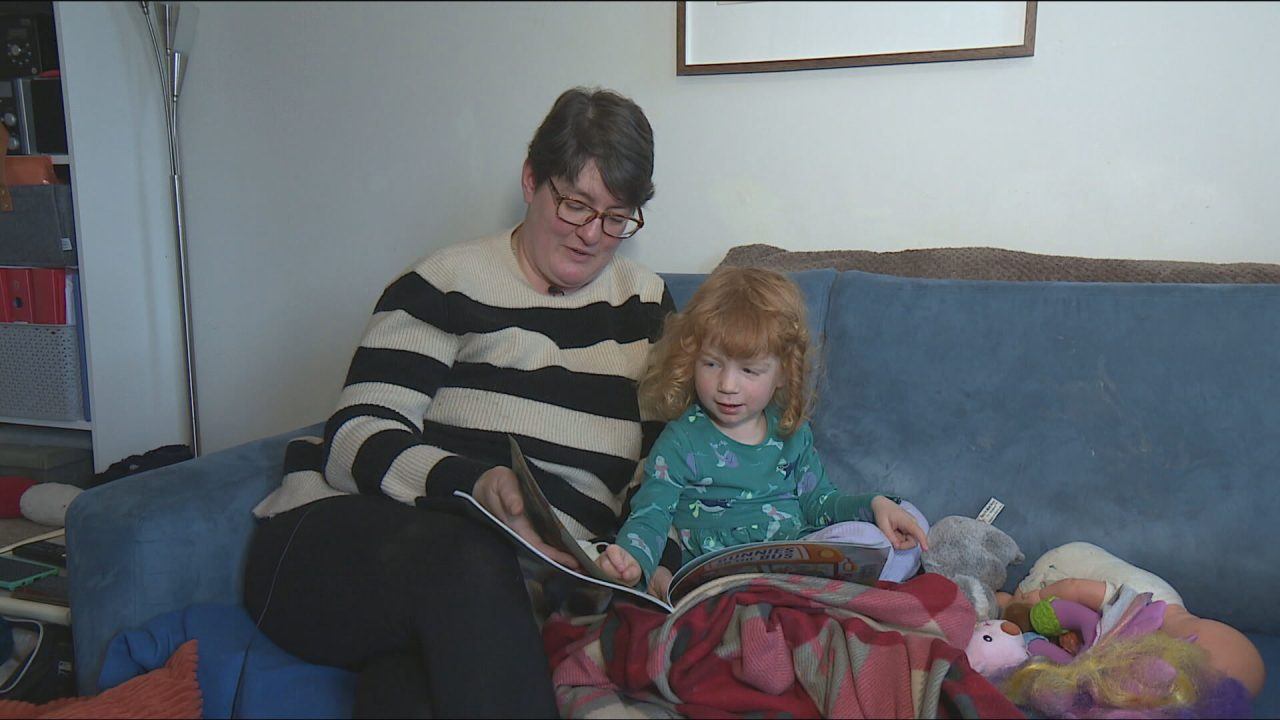
A woman from Kinross who underwent IVF treatment with donor sperm from Denmark says she’s “lost all faith in the system” after it emerged a Danish donor carrying a cancer-causing gene fathered at least 197 children.
Fiona Wark and her three-year-old daughter, Maura, are not affected by the scandal as they used a different donor, but a small number of British women who underwent treatment in Denmark are affected.
Some children conceived from this donor are currently battling cancer and others have already died from the disease.
The anonymous donor’s sperm was used by women for around 17 years and was bought by 67 fertility clinics in 14 countries.
The donor passed all health screening tests, but it has led to anger and questions from Fiona and other Scottish “solo mums” – single women who have used a sperm donor to have a child – about how the number of children created from a single donor could become so large.
“These things should not be allowed to happen,” Fiona told STV News. “Ultimately it’s completely tragic for the families involved in this and my heart is broken for these families. It’s horrendous. But I think what staggered us and what really got to us was the numbers involved.”
“When you trust in the sperm banks to regulate themselves and then they create 197 children – are they regulating themselves?”
Denmark’s European Sperm Bank, which sold the sperm, said families affected had its “deepest sympathy” and admitted the sperm was used to make too many babies in some countries.
Fiona said: “All these stories make us wonder what’s next. You do worry, when does it stop for your own child?”
“We don’t have any particular faith in the way that these sperm banks are operating,” Fiona said. “Which is quite sad because you trust them. You go to them because you trust them. And then they are a business ultimately.”
Europe’s fertility industry is worth around €45bn (£39bn) a year. While there is no law on how many times a donor’s sperm can be used worldwide, individual countries do set their own limits. In the UK, it is ten families per donor – it is strictly enforced and tightly regulated.
With donor-conceived births rising across Europe, eight countries want to discuss an EU limit on the number of children conceived from a single sperm donor in order to prevent future generations from unwitting incest and psychological harms.
Fiona says this current scandal proves it is clear the current family limits are being breached in European countries.
“I think I think there needs to be an international limit and It needs to be a legally enforced,” she told STV News. “I don’t know how they legislate that but they need to figure it out because they’re not shipping bananas here. They’re creating children and this has a long-term impact on these children.”
Fiona says she would use a sperm bank again, adding: “I’m delighted and incredibly grateful that I’ve got Maura from it, but I wouldn’t go that route again.”
The UK’s fertility regulator, the HFEA, told STV News: “We can confirm that the Danish Patient Safety Authority has informed us that a very small number of UK women have been treated in Danish fertility clinics with this sperm donor.
“We understand that they have been told about the donor by the Danish clinic at which they were treated.”
‘We don’t have enough donors to meet demand’
Many women like Fiona choose to go abroad for treatment because they feel there are more options and choice when it comes to available donors, the cost can be lower, and waiting lists can be shorter.
But worldwide, demand for fertility treatments is rising, and in Scotland clinics are struggling to recruit enough local sperm and egg donors. According to the HFEA, in 2022–2023 there were 70 new sperm donors in Scotland, and 20 of those were from Denmark.
“There’s a huge demand for patients needing fertility treatment and a growing demand for people needing egg and sperm donors,” Suzanne Paine from Ninewells Hospital’s Assisted Conception Unit told STV News.
“We offer NHS-funded treatment but we don’t have the number of donors to meet that demand at the minute. So we do rely on people funding their own treatment and seeking sperm abroad.”
NHS patients are matched with local donors, but because of limited supply, private patients are asked to source their own.
Waiting times for NHS treatment can vary, but at Ninewells Hospital in Dundee it is currently 12–18 months for a sperm donor.
Dr Sarah Martin da Silva, fertility expert at Ninewells, told STV News: “We’re very fortunate to have a generous amount of funding for couples that need treatment using donor eggs or donor sperm. If you’re a couple looking to have a family, age is important and your desire for family is important. A long waiting time is not nice.
“Becoming a sperm donor is quite an involved thing for somebody to step forward and do that. The important thing is that there is no sort of parental or legal or financial responsibility of the sperm donor to the children conceived.”
Despite the difficulty in finding local donors, experts are not only encouraging more men and women to donate, but urging those seeking treatment to only access help via a regulated clinic.
“I think a lot of potential donors don’t know that there’s actually a need of the donors,” said Sarah Beverdige from Ninewells’ Assisted Conception Unit. “Although probably only about one in ten of the donors actually succeed in being recruited as a donor.”
“Anyone that’s considering being an egg or a sperm donor can go onto the Fertility Scotland website, the Fertility Scotland Network website, and be given information about what’s involved with donating eggs or sperm and the initial consent forms are in there as well.”
Follow STV News on WhatsApp
Scan the QR code on your mobile device for all the latest news from around the country