 Adobe Stock
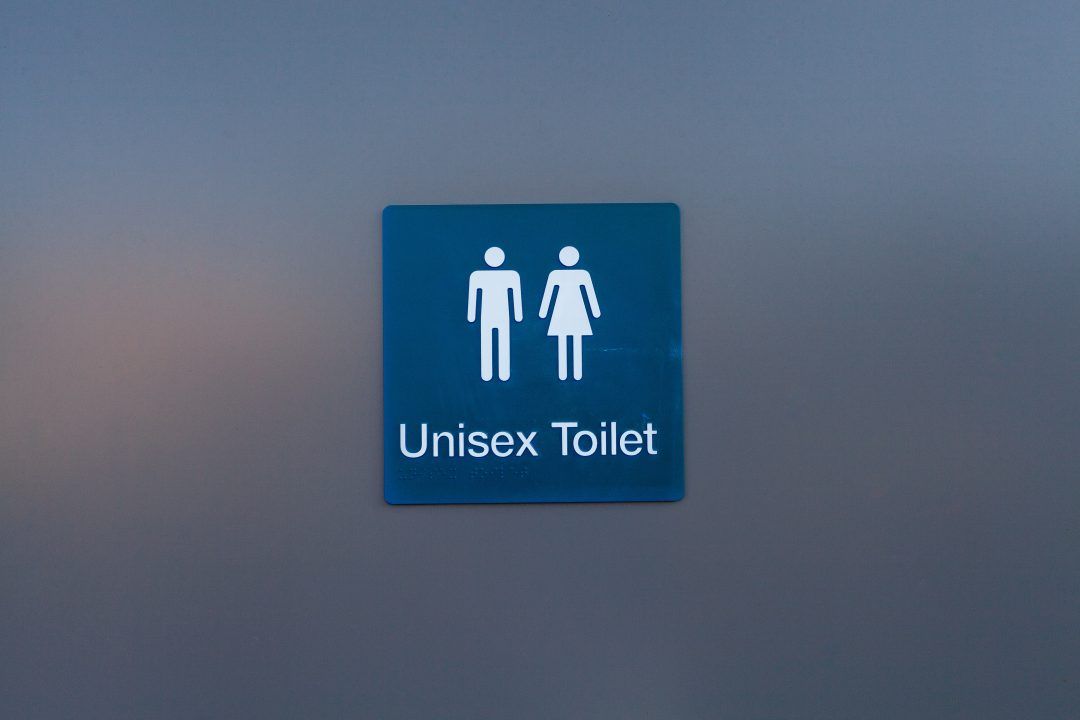
A Scottish council acted unlawfully by failing to provide single-sex toilet facilities at a new primary school, a judge has ruled.
Lady Poole concluded on Thursday that West Lothian Council had failed to comply with legal requirements at a school in its local authority area.
The parents of a female primary one pupil raised a judicial review at the Court of Session in Edinburgh over the council’s policy on the matter.
A judgment issued on Thursday told how the girl’s family reported that the child felt distressed about having to use mixed-sex toilet areas at the school.
The court heard that the five-year-old child, who cannot be named for legal reasons, did not like using the toilets. She said boys were “too noisy” and had cut her fluid intake to avoid using the facilities during the school day.
Lady Poole also heard that the child regularly came home “in pain” because she refused to use the toilets during the day.
The court heard that other parents had expressed concerns about the school’s arrangements.
This prompted the parents of the child, who was identified in the judgment as C, to go to Scotland’s highest civil court.
Their lawyers sought legal orders stating that the school’s toilet arrangements were unlawful.
Lawyers for the local authority argued that the bathroom provision at the school did not breach the law.
Advocate Janys Scott KC argued that the school complied with the law because boys and girls had separate, lockable cubicles.
The council said washhand basins did not have to be inside separate boys’ and girls’ toilet rooms, and that pupils who did not wish to use the main toilet areas could use other available toilets in the school.
Lady Poole rejected the council’s arguments. She referred to the School Premises (General Requirements and Standards) (Scotland) Regulations 1967.
The judge held that “sanitary accommodation” meant more than the toilet cubicle itself. It included the wider toileting area, including nearby wash basins.
Lady Poole found that because the main toilet areas required boys and girls to share washing and waiting space, the council had not provided lawful sanitary accommodation for boys and girls.
The court also found that the arrangements amounted to indirect sex discrimination under the Equality Act 2010.
Lady Poole accepted that girls may face particular issues of privacy, dignity and hygiene when using mixed-sex toilet spaces, especially where they must leave a cubicle and wash their hands in an area also used by boys.
In the judgment, Lady Poole wrote: “The court finds that there is particular disadvantage within the meaning of section 19(2)(b) of the 2010 Act.
“The particular disadvantage is a combination of the additional issues for girls relating to contamination of hands due to their anatomy and physiology, and the general vulnerability of girls having to perform intimate activities in communal areas. These give rise to legitimate considerations of privacy, dignity and health and safety.”
Last year judge Lady Ross, who also sits at the Court of Session, issued a court order making it a legal obligation for Scottish state schools to have separate lavatories for boys and girls.
It followed a Supreme Court ruling in April last year, which declared that for the purposes of equality law in the UK, biological men could not become legally female.
However, in this case, the girl’s parents thought West Lothian Council’s position – that the mixed-sex toilet areas were lawful because there were lockable cubicles – was not good enough.
They took their case to the Court of Session.
Earlier this year, their advocate David Welsh told the court that the girl, who otherwise liked being at the school, felt distressed by having to use toilets with boys.
He said: “She has been refusing to use the toilets in school.
“Instead, she has been forcing herself to wait to use the toilet when she returns home. Often… she is required to rush to use the toilet. She is in pain.”
Mr Welsh said the girl had deliberately reduced her fluid intake so she did not have to visit the lavatory and claimed the boys were “loud” in the shared area.
Janys Scott KC, representing the council, insisted the lavatory facilities were legal and uncontroversial.
She said that each cubicle provided floor-to-ceiling privacy and that the girl had been offered an alternative.
However, Lady Poole ruled against the council. She granted legal orders against the council, including one declaring the toilet provision unlawful.
Lady Poole also ordered the council to pay the parents’ legal bills in the case.
She wrote: “The petition does not seek any orders for specific performance. It is expected that public authorities will take necessary steps to comply with court orders and regularise a position the court has held to be unlawful.
“It is left for the Council to decide how it proposes to ensure compliance with the law.”
Follow STV News on WhatsApp
Scan the QR code on your mobile device for all the latest news from around the country