 SNS Group
Prosecutors got it “wrong” when they decided not to bring footballer David Goodwillie to trial on rape charges, a court has heard.
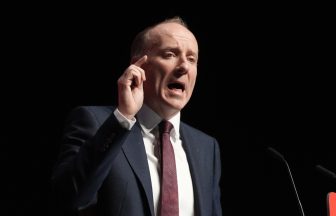
Advocate Thomas Ross KC told appeal judges that the Crown failed to follow correct legal procedures when it decided not to prosecute Goodwillie.
Mr Ross is acting for the woman who was allegedly sexually assaulted by Goodwillie following a night out in Bathgate, West Lothian, in January 2011.
Goodwillie and former Dundee United teammate David Robertson were ruled to have raped young mother Denise Clair in a civil damages action she brought against the pair after the Crown Office elected not to prosecute.
The pair deny wrongdoing. Goodwillie once told a podcast that he welcomed the opportunity to stand trial on the matter but has now changed his position.
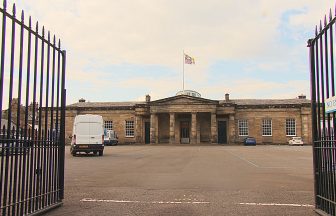
Ms Clair has now sought the help of Mr Ross, who is asking the Court of Criminal Appeal in Edinburgh to grant permission to bring a private prosecution against Goodwillie.
On Thursday, Mr Ross told judges Lord Pentland, Lord Matthews and Lady Carmichael that prosecutors had enough evidence available about the alleged assault to bring Goodwillie to court.
He pointed to evidence which shows that Ms Clair was intoxicated in the hours leading up to the attack and didn’t provide consent to what allegedly happened to her.
Mr Ross said: “In any calendar year the prosecution service receives 150,000 to 200,000 reports each year to consider.
“It is inevitable that mistakes will be made.
“It is our submission that there was a substantial body of evidence available which supports our position that the first respondent assaulted the complainer.
“There was a sufficient body of evidence available which would have allowed a prosecution to proceed and there was a reasonable chance of conviction.
“Our position is that in the circumstances the Crown have got it wrong.”
Ms Clair, who previously waived her right to anonymity, had been on a night out in Bathgate, in West Lothian, on January 1 in 2011 before she claimed she was raped at a flat in nearby Armadale.
The Court of Session heard she travelled in a taxi with the players to the flat and woke up naked in a strange house.
The judge who heard the civil action, Lord Armstrong, found that in the early hours of January 2 in 2011 the players took advantage of her when she was vulnerable through an excessive intake of alcohol and raped her.
They had denied raping her but were ordered to pay £100,000 in damages.
On Thursday, Mr Ross told the court that witness statements provided to the Crown provided it with evidence which could have given it the basis to bring the prosecution.
The court heard that there was evidence available to show that Ms Clair was intoxicated.
A taxi driver told police officers that he picked up Ms Clair and Goodwillie and Robertson in Bathgate following a night out.
Mr Ross told the court of what the man told the police in a statement.
He said: “The witness said ‘I was getting a no right feeling about the lassie because of the guys’.”
Mr Ross said the taxi driver said that Goodwillie had told him that he was “onto a promise” and that he was going to have “sex with the lassie” sitting in the back.
Speaking about the witness statement, Mr Ross added: “He later says that if it was his own daughter he would not have allowed her to leave the taxi.”
The court heard that the witness had also told the court that Ms Clair “had a drink but wasn’t drunk.“
Mr Ross told the court that the Crown had made an irrational decision in deciding not to prosecute Goodwillie.
The court heard that lawyers needed to pass a legal test if they wanted to bring a private prosecution in Scotland.
The court heard that this test was that prosecutors, in making a no-prosecution decision, had made a decision that “no reasonable” prosecutors could have made.
The court heard that only two private prosecutions had been brought in the 20th century and none had taken place in the current century. The court heard that it was a high standard test.
Crown lawyer Alan Cameron KC told the court that prosecutors had acted correctly when it decided not to prosecute Goodwillie.
He said that when all the evidence available in the case was considered, the Crown were entitled not to bring Goodwillie to court.
Mr Cameron added: “There are no exceptional circumstances which would permit the issuing of criminal letters.”
Mr Goodwillie’s lawyer Lord Stewart of Dirleton KC said that legal tests which needed to be passed to bring a private prosecution weren’t passed.
He also spoke of the possibility that the evidence given by his client could be used at the prosecution and said this would be unfair to Goodwillie.
He added: “The evidence proceeded on the Lord Advocate having renounced the right to prosecute.
“Had it been clear that a prosecution was going to follow then the Lord Advocate should have issued a warning.”
Lord Pentland, Scotland’s most senior judge, thanked the lawyers for their submissions.
He added: “We will take time to consider all of the material and we will issue a judgment as soon as practicable.”
Follow STV News on WhatsApp
Scan the QR code on your mobile device for all the latest news from around the country